


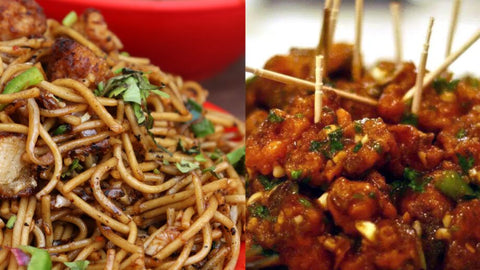
Welcome to Asia, the largest continent on earth. The most exquisite and diverse cuisines in the world are found here. The combination of spices, cultures, scenery and vegetation makes up the best food you'll ever eat, giving each dish a distinctive flavour. Whatever region you are from, Asian cuisine should be on your list of things to eat — everything from fine dining to street food to Asian fusion. But as they say, the original is always best.

20 traditional foods around Asia

1. Adobo from the Philippines
Adobo is a popular Filipino dish. Meat, seafood or vegetables are marinated in vinegar, soy sauce, garlic, bay leaves and black peppercorns.
2. Tom Yam from Thailand
Tom Yam is a hot and sour soup that typically contains prawns. It is well known for its spicy, sour and aromatic herbs and spices. The dish is usually prepared with lemongrass, kaffir lime leaves, galangal, lime juice, fish sauce and crushed red chillies.
3. Nasi Goreng from Indonesia
Nasi Goreng, a fried rice dish made with a combination of meat and vegetables, is known as Indonesia's national dish. It is distinguished from other fried rice dishes by its smoky scent, caramelised taste and savoury flavour. There is no single recipe — numerous varieties exist, some of which vary from household to household.
4. Hummus from Lebanon
This Levantine dish can be a dip or a starter and is part of a mezze, a spread of small dishes served before a multi-course dinner. Hummus is made with chickpeas, tahini, garlic, lemon juice and cumin, topped with olive oil, paprika and parsley, and often finished with whole chickpeas or pine nuts.
5. Tonkatsu from Japan
Tonkatsu is a fried pork dish from Japan that tastes a lot like schnitzel. Although it comes from Japan, it is hugely popular in Korea too — there is a tonkatsu place in almost every area of Seoul. The first step is choosing the meat: in Japan you can ask for a tonkatsu cut specifically, but elsewhere a plain tenderloin or a boneless pork cutlet about 1cm thick will do.
The best tonkatsu in Japan is said to come from the Kagoshima Prefecture's kurobuta, or black pig. Season with salt and pepper and lightly flatten the meat to tenderise it. Then coat in white flour, whisked egg, and panko — Japanese breadcrumbs.
6. Baozi from China
Baozi, or bao, is a steamed bun made of mantou bread and filled with savoury or sweet fillings such as pork, fish or vegetables. It's a popular Chinese breakfast and snack. The most common is char siu bao, filled with Cantonese-style barbecued pork; xiao long bao, smaller Shanghai-style baozi stuffed with minced meat; and tangbao, giant soup-filled bao buns prepared with pork or crab stock.
7. Kimchi from Korea
Kimchi is a traditional side dish popular in both North and South Korea, made from vegetables that have been brined, spiced and fermented. There are many types, but the best known are baechu-kimchi, Korean for “cabbage kimchi”, kkakdugi or “radish kimchi”, and cucumber kimchi.

Kimchi preparation is time-consuming and labour-intensive. Households often make a batch that will last all winter from as many as 200 cabbage heads. The napa cabbage heads are first chopped in half, then rubbed with coarse salt between the leaves and brined for several hours.
8. Onigiri from Japan
Onigiri is a traditional Japanese snack that can be made without any special equipment and is best eaten either on its own or as part of a bento box. Put simply, it is a Japanese rice ball generally filled with a variety of ingredients including salmon, umeboshi (sour Japanese plum), katsuobushi (dried, fermented and smoked skipjack tuna), and tsukudani (small pieces of seafood, meat or seaweed simmered in soy sauce and mirin).
Unlike sushi, onigiri uses only cooked Japanese short-grain rice, moulded by hand into balls or triangles and then wrapped in nori.
9. Satay from Indonesia
Tender pieces of meat that have been marinated, put on skewers and grilled over hot charcoal, served with a rich peanut sauce. This is a common dish across Asia, but it can be made less spicy and sweeter in different regions. Satay is best in its home country of Java, Indonesia, which is where it came from.
10. Candied haws from China
In China, tanghulu, or candied haw, is a popular traditional fruit snack. This sweet treat tastes a lot like toffee apples and is often eaten in winter. It is made from red and yellow Chinese hawthorn fruits dipped in sugar syrup and threaded onto bamboo skewers.
11. Ramen from Japan
Ramen is a noodle soup first made by Chinese cooks in Japan in 1910. They put noodles in a salty broth and boiled them. These curly noodles were bright yellow and more flexible than the Japanese noodles made at the time.
It got its name from how people in 1958 pronounced the Chinese word “lamian”, meaning “pulled noodles”. In the same year, Nissin Foods made the first instant noodles with a chicken-flavoured broth, called Chickin Ramen.
12. Sushi from Japan

Sushi is probably the most well-known Japanese dish. It is usually made by rolling rice and fillings in a sheet of dried seaweed. But “sushi” is really an umbrella term for a lot of different dishes, made with many different ingredients in many different ways.
Even though the word “sushi” has come to mean “raw fish”, the main ingredient in all types of sushi is simply vinegared rice.
13. Sans Rival cake from the Philippines
Sans rival is made of three layers of cashew nut meringue separated by French buttercream. Depending on the recipe, whole cashew nuts can be added to the buttercream. Once the cake is assembled, the remaining buttercream is spread over it and chopped cashews are sprinkled on top.
The rich, buttery cream, the crunchy nuts in the meringue and the chopped cashews on top give the dessert its unique texture. A real sans rival should have layers of crisp meringue, so it is kept in the freezer until it's time to serve.
14. Black sesame soup from China
This traditional Chinese dessert is very popular in Hong Kong, Taiwan and the southern provinces. It's sweet and nutty, so it's a good choice for pudding. It only needs black sesame seeds, rice flour, sugar (rock sugar) and water, but there are many ways to make it.
Usually the rice is soaked overnight and the sesame seeds are toasted, but some recipes call for both the rice and sesame seeds to be soaked overnight and then ground into a powder the next day. The next step is to mix this powder with water and sugar and cook it until it thickens slightly.
15. Yakiniku from Japan
Yakiniku is a Japanese method of cooking meat and vegetables cut small enough to eat in one bite. The dish was based on the famous Korean meals galbi and bulgogi.
Raw meats and vegetables are cut up and brought to the table for diners to cook themselves. Pork, beef, chicken and shellfish are some of the most popular ingredients. Serve it with soy sauce, garlic oil sauce or miso sauce.
16. Dim sum from China
Dim sum is a small dish eaten with tea. It could be a rice noodle roll, a dumpling or a bun. The name “dim sum” means “to touch the heart”, and comes from when royal cooks in China made snacks for the Chinese emperors many years ago.
17. Roti from India
Roti is an Indian flatbread. It is unleavened, made with wholemeal flour, and traditionally cooked on an iron griddle called a tava. When rotis were first made in Persia, they were said to be much bigger and thicker than they are now.
18. Mochi from Japan
Mochi, sticky rice cakes, are prominent in Japanese food and culture. Mochi is made by pounding cooked or steamed mochigome rice into a thick paste.
It's then rolled into small rounds. Despite its Chinese origins, mochi is a Japanese staple. During the Yayoi period it was consumed only by the elite. During the Heian period it became a delicacy regularly cooked and offered during religious ceremonies.

Mochi can be used in savoury dishes such as soups and snacks, although it's mainly sweet. Mochi is often coloured for dessert, creating a rainbow of shades. Daifuku are round cakes filled with red bean paste, strawberries or ice cream.
Because of its chewy texture, mochi is best eaten in small pieces.
19. Biryani from Iran
Biryani is a dish from the Mughal era. The main parts of biryani are rice (preferably basmati), spices, a base of meat, eggs or vegetables, and dried fruits, nuts and yoghurt. The dish travelled from Persia to India with traders and settlers, and in the 1600s it was named after Mumtaz Mahal, Shah Jahan's queen.
Over time biryani became popular in India and beyond, so there are now many kinds: sindhi biryani, made with yoghurt; Bombay biryani, made with spices and kewra; and Lucknowi biryani, made with a special technique of cooking the meat and rice separately, then together until fully cooked.
What used to be served only to the royal family is now a speciality dish at almost every Indian restaurant. It is often flavoured with cardamom, cinnamon, bay leaves, coriander or mint leaves.
20. Shabu shabu from Japan
Shabu-shabu is a popular Japanese dish made by swirling thinly sliced meat and vegetables in simmering broth. It is usually made with beef, but can also be made with chicken, lamb, pork, crab or lobster.
Top 4 cuisines you should try when you visit Asia
A must-try from Western Asia
Western Asian cuisine draws on recipes from many different countries. In the past it was where the empires of Sumeria, Akkad, Assyria and Babylon were born. As a trade hub between Europe and Asia, the Middle East has seen a lot, which has brought many new ingredients to its food. Turkish cuisine is a must-try when you visit Western Asia.

Turkish cuisine is one of the world's oldest and most sophisticated. There are many kinds of grilled meat dishes served with vegetables, rice, salads or potatoes. Meze, a spread of small dishes, includes meat dishes like kofte, fish dishes like rice-stuffed mussels, and vegetables stuffed with meat or rice. The desserts are made of filo or kataifi dough filled with cheese and dried fruit and soaked in sugar or honey syrups flavoured with rose water or orange blossom.
A must-try from Southeast Asia
Your taste buds are in for a treat if you go to Southeast Asia. Thailand and Vietnam, for example, are known for their wonderful food, especially their street food. Even the less well-known kitchens in Cambodia, Laos and Myanmar produce food that is surprisingly good.
Southeast Asia is also known for its unusual snacks and street food. Hard circumstances, the region's “no waste” approach and the demand for protein and minerals led to many unusual improvisations. In Thailand, Cambodia and Laos, travellers can eat deep-fried scorpions, grilled wild rat, and tarantulas fried with garlic, salt and oil. Cambodia and Thailand are known for spicy red ant salads and stir-fries, and deep-fried crickets and grasshoppers.
A must-try from Northern Asia
North Asia's diverse cuisine, built on rice, noodles and soybeans, comes to life with bold, vibrant flavours perfected over hundreds of years.
North Asian food is the food eaten in Siberia. It is often thought of as Russian food because the region is part of the Russian Federation. One of its most popular dishes is pelmeni, or “Russian dumplings”.
A must-try from Eastern Asia
East and Southeast Asian countries have a thousand-year cooking tradition. Neolithic Chinese farmers grew rice, and it's now the key ingredient in most East Asian meals. Rice and wheat noodles are both popular.

Popular proteins include pork, chicken, shellfish and soy products. Vegetables provide nourishment, flavour and colour — cabbage, greens, onions, sprouts and mushrooms are all widely used.
Many cooking components are the same or similar, yet they are combined and prepared differently. The Japanese appreciate simple, delicate cooking, while Koreans like bolder, spicier food. Vietnam has clean, light dishes, whereas Malaysia has rich curries.
FAQs
What are the characteristics of Asian cuisine?
Asian cuisine is known for its vegetables, fruits and herbs. Herbs and spices are central — especially coriander, which is used in many dishes and goes particularly well with soups and seafood.
Do Asians eat rice every day?
Most do, and some eat rice three times a day. But that doesn't mean only white rice. There are many ways to cook rice, and they all taste good.
Experience Asian cuisine at home. Order your ingredients now at Tuk Tuk Mart.