


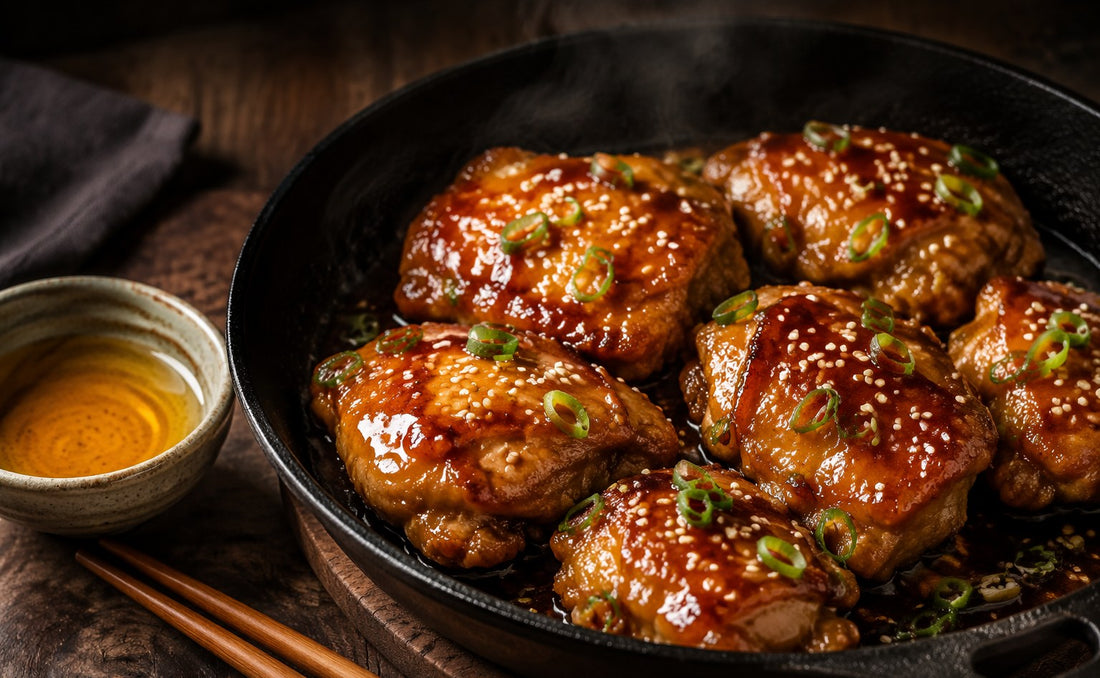
Run out of mirin? The quickest fix is 1 tablespoon of rice vinegar stirred with half a teaspoon of sugar for every tablespoon of mirin the recipe wants. It is not a perfect copy, but it recreates mirin's sweet-and-sour balance well enough for teriyaki, glazes and stir-fry sauces.
The reason mirin is awkward to replace is that it does three jobs at once — sweeten, balance and shine. Here is what it actually is, which substitute works best in which dish, and when it is worth buying the real thing.
What is mirin?
Mirin is a sweet Japanese rice wine made for cooking rather than drinking. It is brewed from glutinous rice with koji (the same mould used to make sake and miso), which converts the rice starch into natural sugars. The result is a golden, lightly syrupy liquid that tastes gently sweet with a soft acidity underneath.
The genuine article is labelled hon-mirin, meaning "true mirin" — brewed and around 14% alcohol. You will also see mirin-style seasonings (aji-mirin), which are made to taste similar with less alcohol and usually added sugar and salt. Both behave the same way in the pan; hon-mirin simply has the deeper, rounder flavour.
One thing mirin is not: it is not rice vinegar. The two sit side by side in Japanese recipes and cause endless confusion — the vinegar section of our substitutes below explains how they can stand in for each other in an emergency.
What does mirin do in a dish?
Three jobs, all at once:
- Sweetness. A soft, rounded sweetness that sits more gently than straight sugar.
- Gloss. The natural sugars are what give teriyaki and glazes their shine and help them cling to the meat.
- Balance. Mild acidity and umami that soften salty soy sauce and tame fishy or meaty smells.
That combination is why no single store-cupboard bottle replaces it perfectly. Whatever you use needs to bring sweetness and acidity together — sugar alone will make a dish sweet, but flat.
The best mirin substitutes
1. Rice vinegar and sugar — the best all-rounder. Mix 1 tablespoon of rice vinegar with half a teaspoon of sugar per tablespoon of mirin, and stir until the sugar dissolves. It is the closest match to mirin's sweet-tangy balance and works anywhere mirin appears, from teriyaki to dressings. A mild Japanese-style rice vinegar suits this best — nothing harsh.
2. Dry sherry and sugar — best for marinades and glazes. Same ratio: 1 tablespoon of dry sherry with half a teaspoon of sugar. A little deeper and nuttier than the vinegar version, and excellent wherever the mirin is part of a marinade. (Handily, dry sherry is also the best stand-in for Chinese rice wine — see our Shaoxing wine substitute guide.)
3. Sake and sugar — best if you already have sake. Use 1 tablespoon of sake with half to one teaspoon of sugar. Sake brings the right rice-wine base note; the sugar simply replaces the sweetness mirin would have added. A bottle of cooking sake earns its keep here.
4. Sweet white wine — the emergency option. Use it one-for-one and cut any other sugar in the recipe by about a teaspoon. It works at a push in teriyaki-style sauces, though the flavour is fruitier than true mirin.
What to avoid: malt vinegar, balsamic vinegar and neat white wine vinegar are all too sharp and will bully the dish. Honey on its own gives sweetness but no acidity, and it burns quickly in a hot pan.
Whichever substitute you choose, add it earlier in the cooking than you think — a minute or two of simmering takes the raw edge off the alcohol and lets the sweetness settle into the sauce.
Need an alcohol-free substitute?
The best substitute happens to be the alcohol-free one: rice vinegar and sugar contains no alcohol at all, so use that with confidence.
It is also worth knowing that most of the alcohol in real mirin cooks off in the pan, and mirin-style seasonings are brewed to be low in alcohol — check the label if it matters to you.
How to cook with mirin
A few habits make mirin work harder:
- For teriyaki-style glazes, use roughly equal parts mirin and soy sauce, and let it bubble until it turns syrupy and coats the meat.
- Add it early in simmered dishes so the alcohol cooks away and the sweetness mellows into the broth.
- Add it late in glazes — the sugars catch quickly, so once it thickens, watch the pan.
- A little lifts dressings and dipping sauces; start with a teaspoon and taste as you go.
Once opened, keep the bottle in the fridge and it will happily see out months of Japanese cooking.
When only real mirin will do
Substitutes cover you for weeknight cooking, but there are dishes where mirin is the point:
- Teriyaki — the glaze is the dish, and real mirin is what makes it gloss rather than just coat.
- Kabayaki-style grills — the sweet soy glaze for eel, chicken or salmon.
- Nimono — Japanese simmered dishes, where the seasoning liquid is delicate and exposed.
- Tsuyu and dipping sauces — mirin is simmered with soy and dashi as the base for noodle dipping sauces.
If you cook Japanese food even once a month, a bottle of real mirin pays for itself — and it keeps well after opening.
Which mirin to buy

Hinode Hon Mirin Sweet Cooking Rice Wine 1L
The genuine brewed hon-mirin — the deep, rounded sweetness behind proper teriyaki gloss.
View product →
Yutaka Mirin (Sweet Rice Seasoning) 150ml
A handy small bottle for occasional Japanese cooking — the easy way to try the real flavour.
View product →
The mild Japanese vinegar behind the best mirin substitute — and proper sushi rice. Browse the full mirin and rice vinegar range.
View product →Mirin substitute FAQs
What is the best substitute for mirin?
One tablespoon of rice vinegar mixed with half a teaspoon of sugar, per tablespoon of mirin. It recreates the sweet-and-tangy balance better than anything else in the cupboard. Dry sherry with sugar is a close second.
Can I use rice vinegar instead of mirin?
Yes, but never on its own — rice vinegar is far sharper than mirin. Stir in about half a teaspoon of sugar per tablespoon of vinegar and it becomes an excellent stand-in.
Is mirin the same as rice wine vinegar?
No. Mirin is a sweet rice wine used for cooking; rice wine vinegar is sour. They are different ingredients that sit next to each other in Japanese recipes, but vinegar plus sugar can stand in for mirin — never the other way round.
Is mirin alcoholic?
Genuine hon-mirin is around 14% alcohol, but most of it cooks off during cooking. Mirin-style seasonings are brewed to be low in alcohol, and the rice-vinegar-and-sugar substitute contains none at all.
Can I use mirin instead of Shaoxing wine?
In many dishes, yes — they are cousins. Mirin is much sweeter than Shaoxing wine, so cut the recipe's other sugar to compensate. For dishes where Shaoxing is the star, use dry sherry instead.
Keep exploring
Stock the rest of the Asian store cupboard: our Shaoxing wine substitute guide covers the Chinese rice wine, the dark vs light soy sauce guide sorts out the other bottle everyone mixes up, and our chicken lo mein recipe puts them all to work in 15 minutes.