


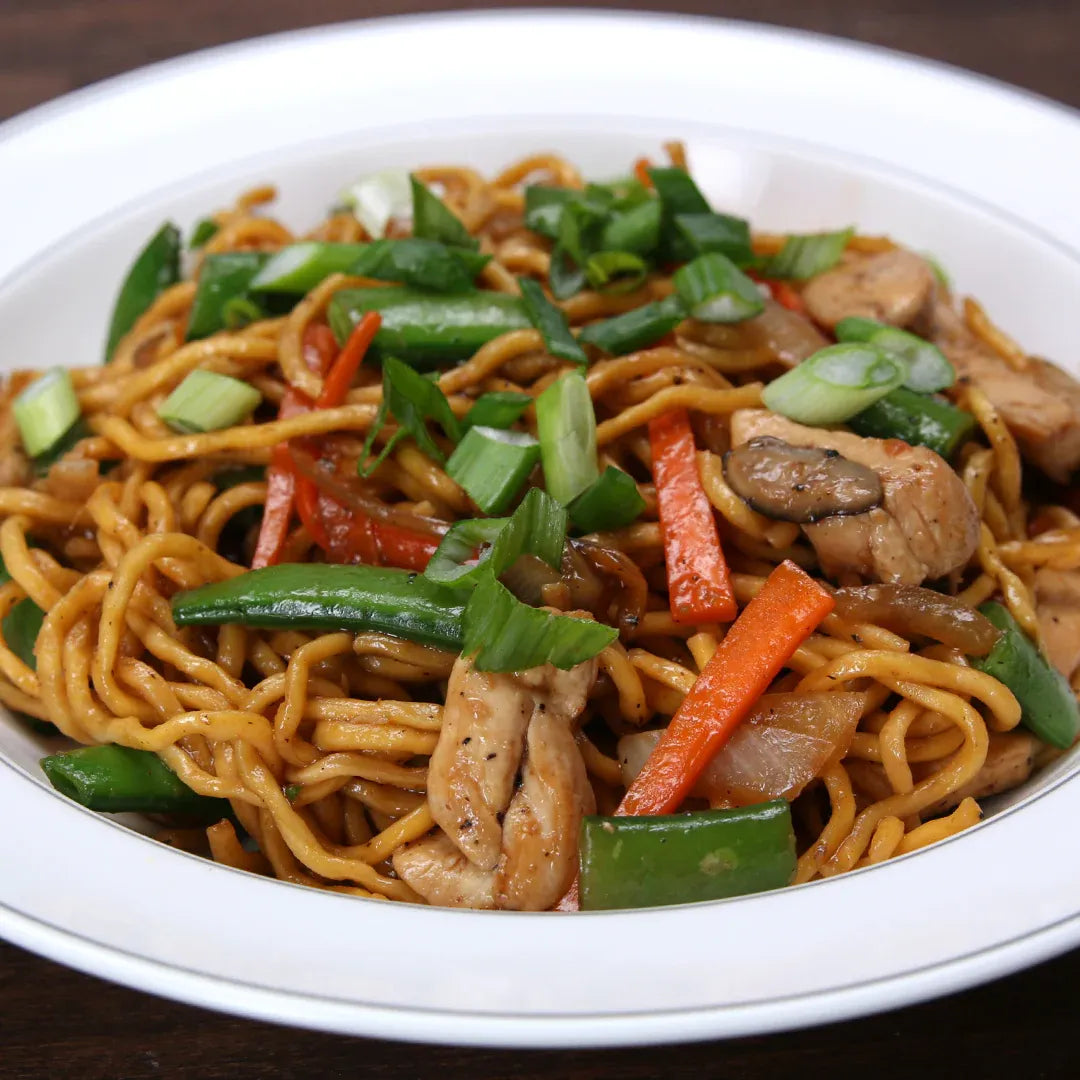
Chicken lo mein is the takeaway order everyone agrees on: springy egg noodles, glossy savoury sauce, tender chicken and whatever vegetables are in the fridge. The good news — it's one of the fastest Chinese dishes to cook at home. Fifteen minutes, one wok, and it beats the delivery driver every time.
The two things that make a takeaway lo mein taste like a takeaway: a proper sauce ratio, and a restaurant trick called velveting that keeps the chicken silky. Both are below.
What is lo mein?
Lo mein (捾面) means "tossed noodles" — soft egg noodles boiled, then tumbled in sauce with meat and vegetables. People constantly mix it up with chow mein, and the difference is simple:
- Lo mein = tossed noodles. Boiled soft, coated in sauce. Plump and glossy.
- Chow mein = fried noodles. Crisped in the wok for texture, often with less sauce.
Same noodles, same ingredients — the difference is all in the technique.
Ingredients (serves 2)
- 200g egg noodles — fresh or dried both work; browse our egg noodle range
- 2 chicken breasts or 3 thighs, thinly sliced — find fresh chicken in our meat section
- 2 cloves garlic, minced
- 3 spring onions, cut into 3cm lengths, whites and greens separated
- 2 handfuls of vegetables — sliced peppers, julienned carrot, beansprouts, mangetout or pak choi all work
For the chicken marinade (velveting):
- 1 tablespoon light soy sauce
- 1 teaspoon Shaoxing rice wine
- 1 teaspoon cornflour
- 1 teaspoon neutral oil
For the sauce:
- 2 tablespoons light soy sauce
- 1 tablespoon dark soy sauce — mostly for that deep takeaway colour
- 1 tablespoon oyster sauce
- 1 teaspoon sugar
- 3 tablespoons chicken stock or water
- 1 teaspoon toasted sesame oil (added at the end)
The velveting trick
Ever notice how takeaway chicken is oddly silky and tender, even though it's plainly cooked in a fierce wok? That's velveting: the meat is marinated with cornflour, which forms a barely-there coating that locks in moisture. Mix the marinade ingredients into the sliced chicken, leave for 15 minutes while you prep everything else, and that's it. One small step, huge payoff.
Method
- Velvet the chicken in its marinade for 15 minutes. Mix the sauce ingredients in a small bowl (hold back the sesame oil).
- Cook the noodles 1 minute less than the packet says — they'll finish in the wok. Drain, rinse briefly under cold water to stop them sticking, and toss with a few drops of oil.
- Sear the chicken. Heat the wok over high heat with a tablespoon of oil. Spread the chicken in a single layer, leave it 30 seconds to colour, then stir-fry until just cooked. Remove to a plate.
- Fry the aromatics and vegetables. Add the garlic and spring onion whites for 20 seconds, then the harder vegetables (carrot, pepper) for a minute, then the quick ones (beansprouts, mangetout) for 30 seconds more. Everything should keep a little crunch.
- Noodles and sauce in. Add the noodles, pour the sauce over, and toss everything together for 1–2 minutes until the noodles are hot, glossy and evenly coloured.
-
Bring it home. Return the chicken, add the spring onion greens, toss once more, take off the heat and stir through the sesame oil. Serve immediately.

5 tips for better lo mein
- Prep everything before the wok gets hot. Stir-frying is 10 minutes of prep and 5 minutes of cooking — there's no time to chop once you start.
- Undercook the noodles. A minute less than the packet says. Overcooked noodles turn to mush the moment they hit the sauce.
- Keep the heat high. You want sizzle from start to finish. If the wok's quiet, it's stewing, not frying.
- Don't double the batch in one wok. Two portions maximum per wok — any more and the temperature collapses. Cook in batches.
- Sesame oil goes in last, off the heat. Frying it makes it bitter; it's a finishing oil, not a cooking oil.
Easy variations
- Beef lo mein: velvet thin slices of steak exactly the same way as the chicken.
- Prawn lo mein: skip velveting — raw prawns need only 90 seconds in the wok, added after the vegetables.
- Vegetable lo mein: swap the chicken for fried tofu puffs or mushrooms, and use mushroom sauce instead of oyster sauce.
- Char siu lo mein: stir in sliced char siu pork at the end — no cooking required, just warming through.
- Chow mein style: let the sauced noodles sit undisturbed in the hot wok for 60–90 seconds so the bottom layer crisps before tossing.
Shop the recipe

The springy yellow noodle every lo mein needs, from a much-loved British Chinese brand.
View product →
Lee Kum Kee Premium Oyster Sauce 255g
The umami backbone of lo mein sauce — a small bottle that transforms stir-fries for months.
View product →
A Hong Kong-style alternative with a firmer bite — the noodle connoisseur's choice.
View product →Chicken lo mein FAQs
What's the difference between lo mein and chow mein?
Lo mein noodles are boiled then tossed in sauce; chow mein noodles are fried until at least partly crisp. Same noodle, different technique — lo mein is soft and glossy, chow mein has crunch.
Can I use spaghetti or dried noodles instead?
Dried egg noodles are completely fine — cook them a minute shy of the packet time. Spaghetti works in an emergency (it's a wheat noodle cousin), though the texture is firmer and less springy.
Why do my noodles stick together?
Usually overcooking, or letting them sit undressed. Cook them a minute short, rinse briefly under cold water, toss with a few drops of oil, and get them into the wok soon after.
Is chicken lo mein gluten free?
Not as written — egg noodles and soy sauce both contain wheat. Rice noodles plus a gluten-free soy sauce gets you close, though the texture becomes more like pad see ew (no bad thing).
How long does lo mein keep?
Up to 2 days in the fridge in a sealed container. Reheat in a hot wok with a splash of water to loosen the sauce — the microwave works too, though the noodles soften further.
More fakeaway favourites
Build the full takeaway night: perfect egg fried rice, peanut chicken satay skewers and nasi goreng all use the same store-cupboard sauces. Not sure which soy does what? Our dark vs light soy sauce guide sorts it in two minutes.