


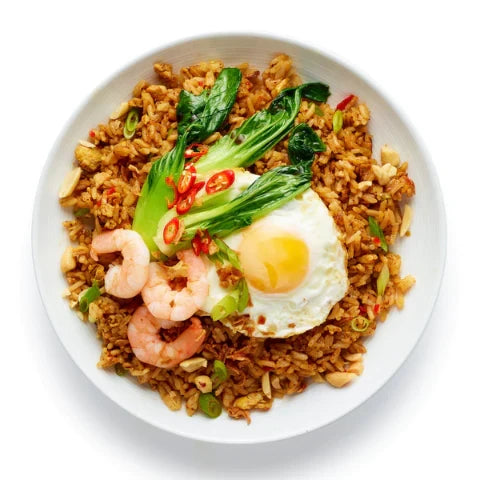
Nasi goreng is Indonesia's answer to fried rice — darker, sweeter and smokier than the Chinese version, crowned with a crispy-edged fried egg. It's the dish that converts people who think fried rice is just a side order, and it takes about 20 minutes from fridge to plate.
The magic comes down to two ingredients most British kitchens don't have yet: kecap manis (sweet soy sauce) and shrimp paste. Both keep for months, and once they're in your cupboard, nasi goreng becomes a weeknight regular.
What is nasi goreng?
Nasi goreng literally means "fried rice" in Indonesian and Malay — but it means something more specific to anyone who's eaten it. It's Indonesia's national dish, sold by street vendors from dawn to late night, and traditionally built on yesterday's rice.
Three things set it apart from Chinese-style fried rice:
- Kecap manis — a thick, molasses-sweet soy sauce that caramelises on the rice, giving nasi goreng its dark colour and sweet-smoky depth.
- Terasi (shrimp paste) — a small amount of funky, savoury fermented shrimp that seasons the whole dish. Think of it as Indonesian fish sauce energy.
- The fried egg on top — non-negotiable. Crispy lace edges, runny yolk, sitting on the rice like a little crown.
Ingredients (serves 2)
- 400g cooked jasmine rice, cooked the day before and chilled — day-old rice is just as important here as in Chinese fried rice
- 2 free-range eggs — one per person, for the topping
- 2 chicken thighs or a chicken breast, diced (or 150g raw prawns)
- 2 shallots (or 1 small onion), finely chopped
- 2 cloves garlic, minced
- 1–2 red chillies, chopped, to taste
- 1 teaspoon shrimp paste (terasi)
- 2 tablespoons kecap manis, plus extra to drizzle
- 1 tablespoon light soy sauce
- 2 tablespoons neutral oil
To serve: crispy fried shallots, cucumber slices, tomato wedges, a lime wedge each, and sriracha or sambal on the side.
The shortcut: skip the shallot-garlic-chilli chopping with a spoonful of ready-made sambal tumis fried in oil as your base.
Method
- Prep first. Break up the cold rice with wet fingers. Mix the kecap manis and light soy in a small bowl. Chop everything — the cooking goes fast.
- Fry the aromatics. Heat the oil in a wok over medium-high heat. Fry the shallots for 2 minutes until softened, then add the garlic, chillies and shrimp paste. Fry 30–60 seconds until deeply fragrant — the shrimp paste mellows as it cooks.
- Cook the chicken. Turn the heat up, add the chicken and stir-fry until cooked through and catching colour at the edges. (Prawns need only 90 seconds.)
- Rice in. Add the rice and toss thoroughly, breaking up any last clumps, until every grain is hot — about 2 minutes.
- Sauce around the edge. Pour the kecap manis mixture around the hot rim of the wok so it sizzles and caramelises as it runs down onto the rice. Toss until the rice is evenly dark and glossy. Taste — it should be sweet first, salty second.
- Fry the eggs. In a separate pan, fry the eggs in a generous film of hot oil until the edges are crisp and lacy but the yolks still run.
-
Plate up. Mound the rice, crown with an egg, and scatter over crispy fried shallots. Cucumber, tomato and a lime wedge on the side, extra kecap manis drizzled over the top.

5 tips for proper nasi goreng
- Use day-old rice. Same rule as all great fried rice — cold, dry grains fry; fresh, wet grains clump.
- Don't fear the shrimp paste. A teaspoon sounds like nothing and smells like a lot — but it cooks down into pure savoury depth. The dish tastes flat without it.
- Caramelise the kecap manis. Down the hot side of the wok, not straight onto the rice. Those few seconds of sizzle are where the smoky sweetness comes from.
- Crisp the egg properly. Hot oil, and don't baby it — the lacy, crunchy edges are half the point.
- Balance to taste at the end. Too sweet? A splash of light soy. Too salty? Another drizzle of kecap manis. It should always land sweet-savoury, not just salty.
Easy variations
- Nasi goreng with satay: serve alongside peanut chicken satay skewers for a full Indonesian spread.
- Seafood nasi goreng: prawns and squid, added after the aromatics — quick-cooking and excellent with the sweet sauce.
- Vegetarian version: skip the shrimp paste (add an extra splash of soy and a pinch of mushroom powder for depth) and load up on tofu and green beans.
- Nasi goreng kampung: the village style — punchier, with extra chilli and shrimp paste, no sweetness held back.
- Leftover turkey or roast meat: nasi goreng is the finest Boxing Day destiny a roast ever had.
Shop the recipe

The kecap manis — thick, dark and molasses-sweet. This one bottle is the whole dish. Browse the full kecap manis range.
View product →
The weeknight shortcut — a ready-fried chilli-shallot base that does the aromatics for you.
View product →
The crunchy finishing touch — on nasi goreng, noodles, soups and honestly everything else.
View product →Nasi goreng FAQs
What is kecap manis, and can I substitute it?
Kecap manis is Indonesian sweet soy sauce — soy sauce thickened with palm sugar until it's syrupy. There's no perfect substitute, but 1 tablespoon of regular soy sauce simmered with 1 tablespoon of brown sugar until slightly thickened gets you most of the way there.
Is nasi goreng spicy?
It's as spicy as you make it — the heat comes from the fresh chillies, which you control. The core flavour is sweet and savoury; serve sambal at the table for those who want more fire.
What's the difference between nasi goreng and egg fried rice?
Both are day-old rice fried over high heat, but the seasoning is completely different. Chinese egg fried rice is savoury (light soy, sesame), while nasi goreng is sweet, dark and smoky (kecap manis, shrimp paste) and always comes with a fried egg on top.
Is nasi goreng gluten free?
Usually not — kecap manis and soy sauce typically contain wheat, and shrimp paste brands vary. Check labels carefully if it matters to you.
Can I use freshly cooked rice?
You can, but it'll go soft and clumpy. Day-old chilled rice keeps the grains separate and lets them caramelise. In an emergency, spread fresh rice on a tray and freeze for 20–30 minutes.
More rice nights
If nasi goreng becomes your new favourite, its cousins are waiting: perfect egg fried rice for the Chinese classic, chicken lo mein for noodle night, and satay skewers for the full Indonesian table.