


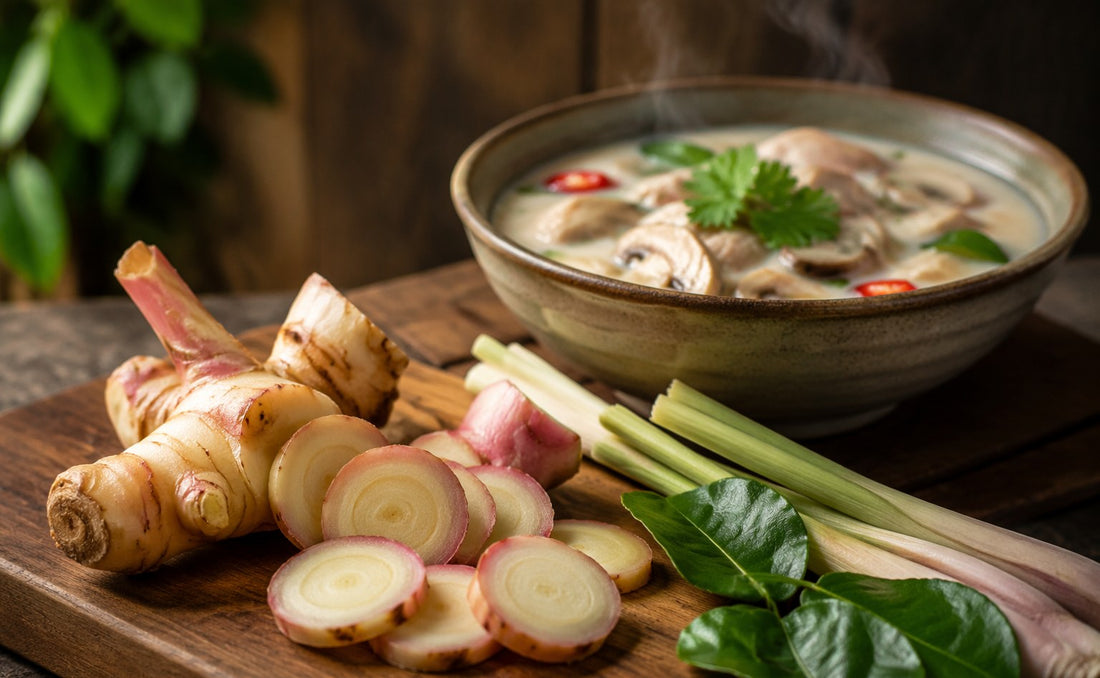
If you have ever followed a Thai curry recipe and come across the word galangal, you are not alone in wondering what it is and where to find it. It looks similar to ginger, grows in the same family of plants, and is used in many of the same cuisines — but it is a distinctly different ingredient with its own character and flavour.
What is galangal?
Galangal (also known as galangal root or Thai ginger) is a rhizome — an underground stem — from the Zingiberaceae family, the same plant family as ginger and turmeric. It is a staple ingredient in Thai, Indonesian, Malaysian and Cambodian cooking, and has been used across South East Asia for centuries.
There are two main varieties. Greater galangal (Alpinia galanga) is the most common in cooking — it is larger, firmer, and has a milder, more complex flavour. Lesser galangal (Alpinia officinarum) is smaller, more pungent, and used more often in traditional medicine than everyday cooking.
Quick fact: galangal is one of the four key aromatics in an authentic Thai curry paste, alongside lemongrass, kaffir lime leaves and chillies. Without it, a Thai green or red curry will taste noticeably different.
Galangal vs ginger — what is the difference?
This is the most common question, and it matters in cooking. While they look similar when whole, the flavour is quite different.
| Property | Galangal | Ginger |
|---|---|---|
| Flavour | Earthy, piney, citrusy, slightly medicinal | Warm, spicy, sweet, peppery |
| Texture | Much firmer and denser | Softer and more fibrous |
| Skin colour | Pale cream to pinkish | Pale yellow to tan |
| Typical cuisines | Thai, Indonesian, Malaysian | Chinese, Japanese, Indian, universal |
| Substitute? | Ginger works in a pinch but changes the flavour | Galangal is not a good substitute for ginger |
They are not interchangeable. If a recipe calls for galangal — particularly in a Thai curry paste, tom kha soup or rendang — using ginger instead will give you a noticeably different result. It will still taste good, but it will not taste authentic.
How to use galangal
Fresh galangal
Fresh galangal is very firm — much harder than ginger — and needs to be peeled before use. A vegetable peeler works well on younger roots; for older, tougher roots you may need a knife. Slice, grate, or pound it in a pestle and mortar. In soups such as tom kha gai it is often sliced into coins and added to infuse the broth, then removed before eating, as it is too fibrous to eat whole.
Galangal paste
Paste is the most convenient option for everyday cooking — ideal for stir-fries, curry pastes, marinades and sauces where you want the flavour without the prep. Use roughly one teaspoon of paste in place of one tablespoon of fresh grated galangal.
Dried galangal
Dried sliced galangal is used mainly for broths and slow-cooked dishes where it has time to rehydrate and release its flavour. Soak in warm water for 20 minutes before using, or add straight to soups and stews.
What dishes use galangal?
Tom kha gai
Thai coconut milk soup — galangal is essential, not optional.
Thai curry paste
Red, green and yellow curry pastes all use galangal as a core aromatic.
Rendang
Indonesian slow-cooked beef — galangal gives it its distinctive depth.
Laksa
Malaysian noodle soup, where galangal forms part of the spice paste base.
Where to buy galangal in the UK
Fresh galangal turns up in some Asian supermarkets in larger UK cities, but availability is inconsistent and it is not something we currently stock. The practical route for most home cooks is a ready-made paste that already contains galangal — tom yum and Thai curry pastes are built on it, and they save you sourcing and pounding the root yourself.

Maesri Tom Yum Paste (Hot & Sour) 225g
Galangal, lemongrass and kaffir lime already pounded together — the fastest honest route to tom yum or tom kha at home.
View product →
The other half of tom kha gai — full-fat Thai coconut milk that carries the galangal flavour through the whole bowl.
View product →Browse the full Thai ingredients collection for curry pastes, fish sauce, palm sugar and everything else a Thai curry needs.
Galangal FAQs
Can I substitute ginger for galangal?
You can, but the result will taste different. Ginger is spicier and sweeter; galangal is earthier and more piney. In a pinch, use half the amount of ginger and add a small squeeze of lime to approximate galangal's citrusy notes.
Do you eat galangal, or is it just for flavour?
Galangal is extremely fibrous and tough when cooked whole — it is used to infuse flavour and typically removed before serving. When very finely grated or ground into a paste, it can be eaten as part of the dish.
How do I store fresh galangal?
Wrap unpeeled fresh galangal in kitchen paper and keep it in the fridge for up to two weeks. It also freezes well whole for up to three months, and can be grated straight from frozen.
Is galangal the same as ginger?
No. Galangal and ginger come from the same plant family but are distinct ingredients with different flavour profiles and textures. They are not interchangeable in authentic South East Asian recipes.