


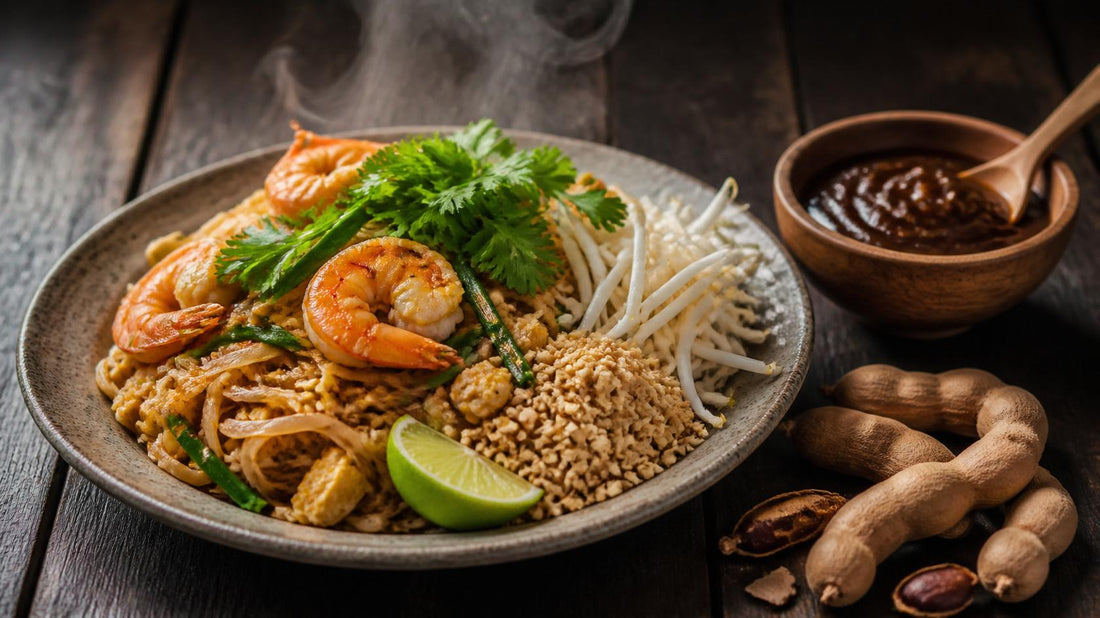
Tamarind is the ingredient behind the sweet-sour flavour in pad thai, many Thai curries and a proper Indian chutney. If you have ever wondered what makes those dishes taste bright and tangy rather than just sweet, this is usually it. Here is what tamarind is, what it tastes like, and how to use it at home.
What is tamarind?
Tamarind is a tropical fruit that grows in long brown pods on the tamarind tree, originally from Africa but now grown across South and South East Asia. Inside each pod is a sticky, dark brown pulp wrapped around hard seeds, and it is that pulp that cooks use.
In UK kitchens you will almost never see the fresh pods. Instead, tamarind is sold in three practical forms:
- Tamarind purée or paste — the pulp, seeded and ready to use. This is the easiest form and the one we recommend for most cooking.
- Tamarind concentrate — a thicker, stronger version of the paste. You need less of it, usually half to two-thirds of the amount a recipe gives for paste.
- Tamarind block — compressed pulp, often still containing seeds and fibres. You soak a piece in warm water, squeeze and strain it. The most traditional form, and the most work.
What does tamarind taste like?
Sour first, then sweet, with a fruity depth somewhere between dates, lemon and dried apricot. Good tamarind is tangy rather than sharp — it adds brightness to a dish without the harsh edge you would get from vinegar.
That balance is why tamarind is so important in Thai cooking, where dishes are built around salty, sweet, sour and spicy hitting at the same time. Fish sauce brings the salt, palm sugar the sweetness, chillies the heat — and tamarind brings the sour.
6 easy ways to use tamarind
- Pad thai. The classic. Tamarind is the backbone of the sauce, alongside fish sauce and palm sugar. If your homemade pad thai has tasted flat, missing tamarind is usually why.
- Curries and soups. A spoonful stirred into a Thai sour curry (kaeng som) or a South Indian sambar gives the whole pot a gentle tang.
- Stir-fry sauces. Mix tamarind purée with fish sauce, a little sugar and water for a quick sauce that works with prawns, chicken or tofu.
- Marinades. The acidity tenderises meat. Tamarind with garlic, soy sauce and a touch of sugar makes an excellent marinade for pork or chicken skewers.
- Dipping sauces and chutneys. Tamarind chutney is the dark, sweet-sour sauce served with samosas and pakoras. It keeps well in the fridge.
- Drinks. In Mexico and Thailand tamarind is diluted with water and sugar into a refreshing agua de tamarindo. Worth trying in summer.
Tamarind substitutes
No substitute is perfect, because nothing else has tamarind's particular sweet-sour depth. But if a recipe calls for it and you are stuck:
- Lime juice plus a little brown sugar — the best quick swap. Use the juice of half a lime with a teaspoon of soft brown sugar for every tablespoon of tamarind paste.
- Rice vinegar plus sugar — same idea, slightly milder. One tablespoon of rice vinegar with a teaspoon of sugar per tablespoon of paste.
- Amchoor (mango powder) — a good swap in Indian cooking, where it plays a similar souring role. Use about half the amount.
- Worcestershire sauce — an old cookbook standby because tamarind is one of its ingredients. It works in a pinch in marinades, but it is saltier and thinner, so cut back on other salt.
Our honest advice: tamarind paste keeps for months in the fridge, costs very little and is the difference between a pad thai that tastes right and one that does not. It is worth having the real thing in the door of the fridge.
How to store tamarind
Purée and concentrate keep for months in the fridge once opened — use a clean spoon and they will happily last six months or more. Blocks keep for a year or more in an airtight container in a cool cupboard. Prepared tamarind water (from a soaked block) should be used within a few days and kept chilled.
Where to buy tamarind in the UK
Most large supermarkets stock a small jar of tamarind paste, but the jars are tiny and the price per gram is high. Asian grocers sell bigger, better-value packs — and at Tuk Tuk Mart we stock both ready-to-use forms:

Ready-to-use seeded purée — the one to buy for pad thai, curries and stir-fry sauces. No soaking or straining needed.
View product →
Garden Queen Tamarind Concentrate 227g
Stronger concentrate for Vietnamese and Thai cooking — use about half the amount a recipe gives for paste.
View product →Browse the full Thai ingredients collection for everything else you need to go with it — fish sauce, palm sugar, rice noodles and curry pastes.
Tamarind FAQs
Is tamarind paste the same as tamarind concentrate?
Not quite. Concentrate is a thicker, stronger version of paste. If your recipe says paste and you have concentrate, start with half the amount and taste as you go.
Is tamarind spicy?
No. Tamarind is sour and fruity, not hot. It often appears alongside chillies in Thai and Indian food, which is where the confusion comes from.
Is tamarind healthy?
Tamarind pulp contains fibre, several B vitamins and minerals including magnesium and potassium. As with any ingredient, it is best enjoyed as part of a varied diet — and in cooking you typically use a spoonful or two at a time.
Can I freeze tamarind paste?
Yes. Freeze it in an ice cube tray, then keep the cubes in a freezer bag. One cube is roughly a tablespoon, which is a handy single-recipe portion.
Why does my tamarind paste look dark?
That is normal. Tamarind pulp is naturally dark brown, and it darkens further with time. As long as it smells fruity rather than fermented or off, it is fine to use.