


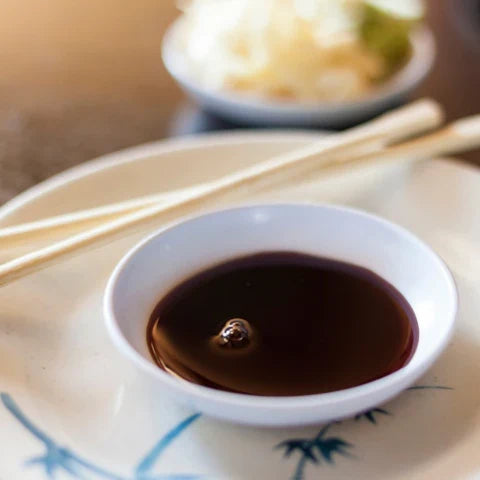
Walk into any Asian kitchen — Chinese, Thai, Japanese, Korean or Vietnamese — and you will find the same bottles and jars coming out again and again. This is that list: the 15 cupboard ingredients that cover the vast majority of Asian home cooking. You do not need to buy them all at once. Start with the first five and add the rest as recipes call for them.
1. Light soy sauce
The workhorse. Light soy is the default seasoning in Chinese cooking and much of South East Asian cooking too — salty, savoury and thin, used the way Western cooking uses salt. If a recipe just says "soy sauce", this is what it means. Use it in stir-fries, marinades, dipping sauces and fried rice.

Lee Kum Kee Premium Light Soy Sauce 500ml
The benchmark light soy — clean, balanced saltiness. The one bottle every kitchen needs first.
View product →2. Dark soy sauce
Dark soy is thicker, less salty and slightly sweet, aged longer with added caramel. Its job is colour more than flavour — it gives fried rice, chow mein and braised dishes their deep mahogany gloss. Most kitchens need both bottles: light for seasoning, dark for colour. Our dark soy vs light soy guide goes deeper on when to use each.

Lee Kum Kee Premium Dark Soy Sauce 500ml
The colour-and-gloss bottle — a splash is all fried rice and noodles need for that restaurant look.
View product →3. Fish sauce
The salt of Thai and Vietnamese cooking. It smells fierce straight from the bottle but mellows into deep savouriness once cooked — nothing else quite replicates it. Essential for pad thai, curries, dipping sauces and marinades. Start with a small splash; you can always add more.

The Thai classic — anchovy, salt and nothing else. Big bottle, proper depth, great value.
View product →4. Oyster sauce
Thick, glossy and savoury-sweet. Despite the name it does not taste fishy — it tastes rich. A spoonful transforms a stir-fry, and it is the classic finish for Chinese greens like pak choi and gai lan. It does a very different job from fish sauce — our fish sauce vs oyster sauce guide explains the difference.

Healthy Boy Oyster Flavour Sauce 700ml
Thick and glossy — the stir-fry upgrade. A spoonful coats noodles, beef and greens beautifully.
View product →5. Toasted sesame oil
A finishing oil, not a cooking oil. A few drops at the end of a stir-fry, noodle dish or soup add a nutty aroma you cannot get any other way. Heat destroys the flavour, so add it off the heat — and never use it for frying.

Pure toasted sesame oil — a few drops finish stir-fries, soups and dressings. You use it a teaspoon at a time, so the big bottle earns its shelf space.
View product →6. Rice vinegar
The gentle acid of Asian cooking — milder and slightly sweeter than white wine vinegar. Use it for sushi rice, salad dressings, quick pickles and dipping sauces. One word of warning: rice vinegar and rice wine are very different bottles, and swapping them is a common way to ruin a dish. Check the label before you pour — our rice vinegar vs rice wine guide explains the difference.

The Japanese standard — mild and clean. The right bottle for sushi rice, dressings and quick pickles.
View product →7. Shaoxing wine
The Chinese cooking wine. A splash in marinades and stir-fries adds the rounded, aromatic depth you taste in restaurant dishes — it is the ingredient most home cooks are missing when their stir-fry tastes flat. No bottle to hand? Our Shaoxing wine substitute guide covers the best swaps.

Three Eights Shaoxing Cooking Wine 500ml
The kitchen staple for marinades, stir-fries and dumpling fillings — restaurant depth for pennies per dish.
View product →8. Jasmine rice
Thai fragrant rice — soft, slightly sticky and gently floral. It is the everyday rice across most of South East Asia, and the right base for fried rice (cook it the day before and chill it overnight). Rinse until the water runs clear for the fluffiest result.

Silk Road Thai Hom Mali Jasmine Rice 2kg
Proper Thai Hom Mali — the fragrant grade. The 2kg bag is the right size to start with.
View product →9. Coconut milk
The base of Thai curries and countless soups and desserts across South East Asia. For curries, do not shake the tin — spoon off the thick cream at the top to fry your curry paste in, then add the rest. Full-fat tins behave far better than light versions, which can split.

Rich, full-fat Thai coconut milk — the tin behind a proper green curry or tom kha gai.
View product →10. Rice noodles
From pad thai to pho. Dried rice noodles keep for months and cook in minutes — the trick is to soak rather than boil them, so they stay springy instead of turning to mush. A medium-width stick (around 3mm) is the most versatile to keep in the cupboard, and our rice noodle types guide covers every width.

Kirin Brand Rice Stick Medium (3mm) 400g
The pad thai width — soak in warm water for 20 minutes, then straight into the wok.
View product →11. Thai curry paste
A proper Thai curry in 15 minutes: fry a couple of tablespoons of paste in coconut cream, add your meat or vegetables, top up with coconut milk. Green is the hottest and most fragrant, red the all-rounder, massaman mild and warming. One tin, endless dinners.

The little tin Thai cooks actually use — fiery, fragrant and miles ahead of supermarket jars.
View product →12. Gochujang
Korea's fermented chilli paste — thick, deep red and a whole flavour profile in one tub: heat, sweetness and a funky, savoury depth. Essential for bibimbap, tteokbokki and Korean marinades, and brilliant in a quick glaze for wings or ribs. Our gochujang guide covers what it is and how to use it.

Chung Jung One Gochujang (Very Spicy) 450g
Korea's best-known brand — proper fermented depth with a serious kick. Keeps for months in the fridge.
View product →13. Sriracha
The table hot sauce — bright, garlicky heat that goes on everything from fried eggs to pho. Less a cooking ingredient, more a permanent resident on the table. Keep one in the fridge door and it will quietly get used every day. If you want a chilli paste to cook with rather than a table sauce, that is sambal — our sambal vs sriracha guide explains the difference.

Healthy Boy Sriracha Hot Chilli Sauce 700ml
Thai-made sriracha in a big bottle — garlicky, tangy and endlessly usable.
View product →14. Tamarind paste
The sweet-sour backbone of pad thai and many Thai curries — a fruity tang rather than a sharp vinegar sourness. If your homemade pad thai has ever tasted flat, missing tamarind is usually why. Our tamarind guide explains the different forms and six easy ways to use it.

Ready-to-use seeded purée — no soaking or straining. The difference between pad thai that tastes right and one that does not.
View product →15. Miso paste
Fermented soybean paste, the soul of Japanese cooking. A tablespoon whisked into hot water (off the boil — boiling kills the flavour) is miso soup in two minutes, but it is just as good in marinades, dressings and glazes. One tub lives in the fridge for months and quietly improves everything.

Hikari Miso Enjuku Mutenka Koji Miso 750g
Japan's favourite everyday miso — mellow, savoury and endlessly useful. Soups, marinades, glazes.
View product →Fresh extras worth adding
Once the cupboard is stocked, a few fresh ingredients lift everything: ginger, garlic, spring onions, coriander, chillies and lemongrass. Buy them little and often rather than in bulk. And if you spot galangal — the tougher, citrusy cousin of ginger used in Thai soups like tom kha gai — our galangal guide explains what to do with it.
Essential ingredients FAQs
Do I need both light and dark soy sauce?
Start with light — it is the everyday seasoning and the more essential of the two. Add dark soy when you want that deep restaurant colour in fried rice and noodle dishes. Between them they cover almost every Chinese recipe you will meet.
What is the difference between fish sauce and oyster sauce?
Fish sauce is thin, salty and intensely savoury — a seasoning, used like salt. Oyster sauce is thick, glossy and savoury-sweet — more of a finishing sauce that coats a stir-fry. They are not interchangeable, and most Asian kitchens keep both. Our full comparison has the details.
Which five should I buy first?
Light soy sauce, fish sauce, oyster sauce, jasmine rice and toasted sesame oil. With those five plus garlic and ginger from any supermarket, you can cook a convincing stir-fry, fried rice or noodle dish tonight. Add curry paste and coconut milk next — that is a Thai curry sorted.
How long do these ingredients keep?
The unopened sauces and pastes keep for a year or more in a cool cupboard. Once opened, soy sauce, fish sauce, oyster sauce and sesame oil are best kept in the fridge door, where they will last for months. Rice and dried noodles keep almost indefinitely in airtight containers. Curry paste, miso and gochujang go in the fridge once opened and happily last months.
Are these ingredients gluten free?
Some are, some are not. Rice, rice noodles, rice vinegar, fish sauce and tamarind are naturally gluten free, but regular soy sauce is brewed with wheat — if you cook gluten free, look for tamari instead. Always check the label, as recipes vary between brands.