


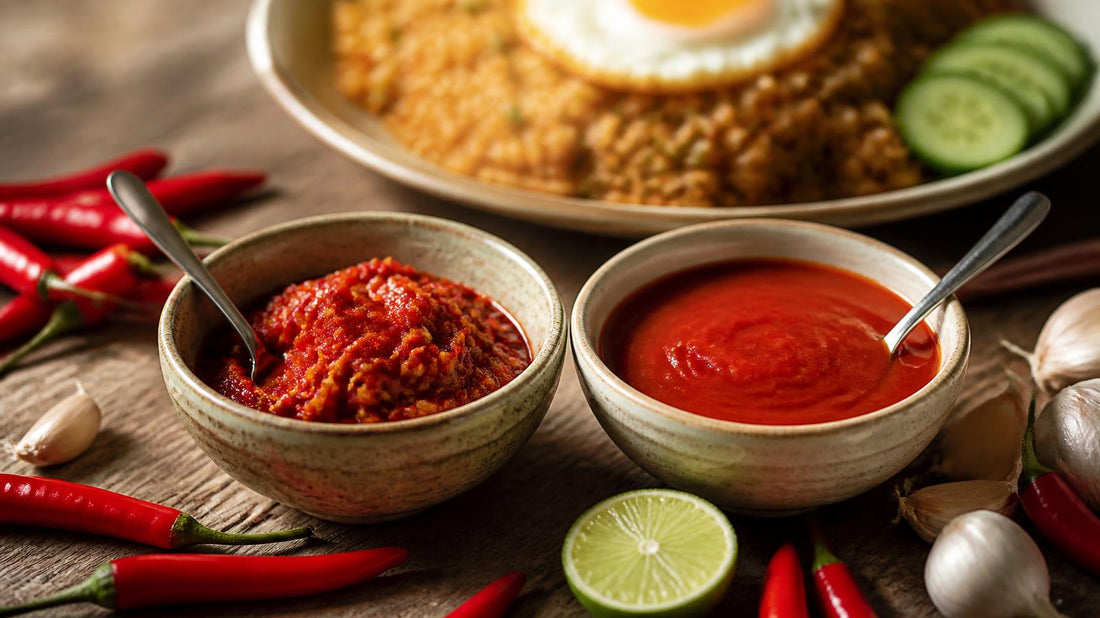
Sambal and sriracha are both red chilli sauces from South East Asia, both hot, and both brilliant — which is exactly why they get confused. But they are made differently, taste different and do different jobs in a dish. Here is how to tell them apart and when to reach for each.
What is sambal?
Sambal is the everyday chilli paste of Indonesia and Malaysia — less a single product than a whole family. At its simplest (sambal oelek) it is just fresh red chillies ground with salt, sometimes with a little vinegar. From there it branches out: sambal manis adds sugar, sambal tumis is fried with shallots and garlic, sambal udang includes dried shrimp, and every region and household has its own version.
The texture is coarse and spoonable, more relish than sauce. Flavour-wise, sambal tastes of fresh, raw chilli first — bright, fruity heat with real texture, rather than a smooth sauce.
What is sriracha?
Sriracha is a smooth, pourable hot sauce named after the Thai coastal town of Si Racha, where it was first made as a dipping sauce for seafood. The version the world knows — the one with the rooster on the bottle — was developed in California and is made from red jalapeño chillies, garlic, vinegar, sugar and salt, blended completely smooth.
It is sweeter, garlickier and more uniform than sambal, and its consistency means it works as a condiment you drizzle or squeeze, not a paste you spoon.
Sambal vs sriracha at a glance
| Sambal (oelek) | Sriracha | |
|---|---|---|
| From | Indonesia / Malaysia | Thailand (popularised in the US) |
| Texture | Coarse, chunky paste | Smooth, pourable sauce |
| Main flavours | Fresh chilli, salt | Chilli, garlic, sugar, vinegar |
| Sweetness | Low (except sambal manis) | Noticeable |
| Best used | Cooked into dishes; base for sambal goreng | At the table as a condiment; drizzling |
Can you substitute one for the other?
Yes, with caveats — they are closer to each other than to anything else. A few adjustments:
- Sambal for sriracha: use a little less (sambal oelek is usually hotter), and add a pinch of sugar and a drop of vinegar to make up for what sriracha would have brought.
- Sriracha for sambal: use a little more, and expect a smoother, sweeter, more garlicky result. In a fried dish like nasi goreng it works perfectly well.
If heat is what you are after and neither is to hand, Korean gochujang is a different beast again — fermented, sweeter and deeper. Our gochujang guide covers where it fits.
How to cook with sambal
Think of sambal as a cooking ingredient first. Fry a spoonful in oil at the start of a dish and it perfumes everything that follows — that is the base of sambal goreng (fried sambal dishes), Malaysian sambal prawns, and countless noodle and rice dishes. Stir it into nasi goreng, toss it with green beans, or serve a dab beside rice and fried chicken. It is also the traditional partner for nasi lemak, Malaysia's coconut rice breakfast.
How to cook with sriracha
Sriracha is happiest as a finisher: squeezed over pho, fried eggs, fried rice, noodles or anything off the grill. It blends smoothly into mayonnaise for a quick spicy dip or burger sauce, and a spoonful lifts a stir-fry sauce at the end of cooking. Because it is already smooth and balanced, it needs nothing done to it.
Which to buy
For sambal, start with oelek — the pure, versatile one. For sriracha, any of the Thai-made bottles will serve you well:

The classic Indonesian ground chilli paste — just chillies and salt. Fry it, stir it, or serve it as it comes.
View product →
Smooth, garlicky Thai sriracha in a big table bottle — made for drizzling over noodles, eggs and rice.
View product →Find more of the family — sambal manis, sambal tumis, green sriracha and extra-hot versions — in our Indonesian and Thai collections.
Sambal vs sriracha FAQs
Which is hotter, sambal or sriracha?
Usually sambal oelek. It is mostly chillies with little to soften the blow, while sriracha is rounded out with sugar and garlic. Heat varies by brand, though — taste a little before you commit a spoonful.
Is sambal oelek the same as sriracha?
No. Sambal oelek is a coarse Indonesian paste of chillies and salt; sriracha is a smooth, sweeter Thai-American sauce with garlic and vinegar. Texture and flavour are both quite different.
What is the difference between sambal oelek and sambal manis?
Manis means sweet in Indonesian — sambal manis is sambal with added sugar, giving a milder, stickier, more ketchup-like result. Oelek is the plain, hotter original.
Does sambal need to be refrigerated?
Once opened, yes — keep it in the fridge with a clean spoon and it will last for months. Unopened jars are fine in a cool cupboard.
Is sriracha actually Thai?
The name and style are — it began in the town of Si Racha as a seafood dipping sauce. The famous rooster-bottle version, however, was created by a Vietnamese-American maker in California. Thai brands still make their own excellent versions, which tend to be a little sweeter and thinner.