


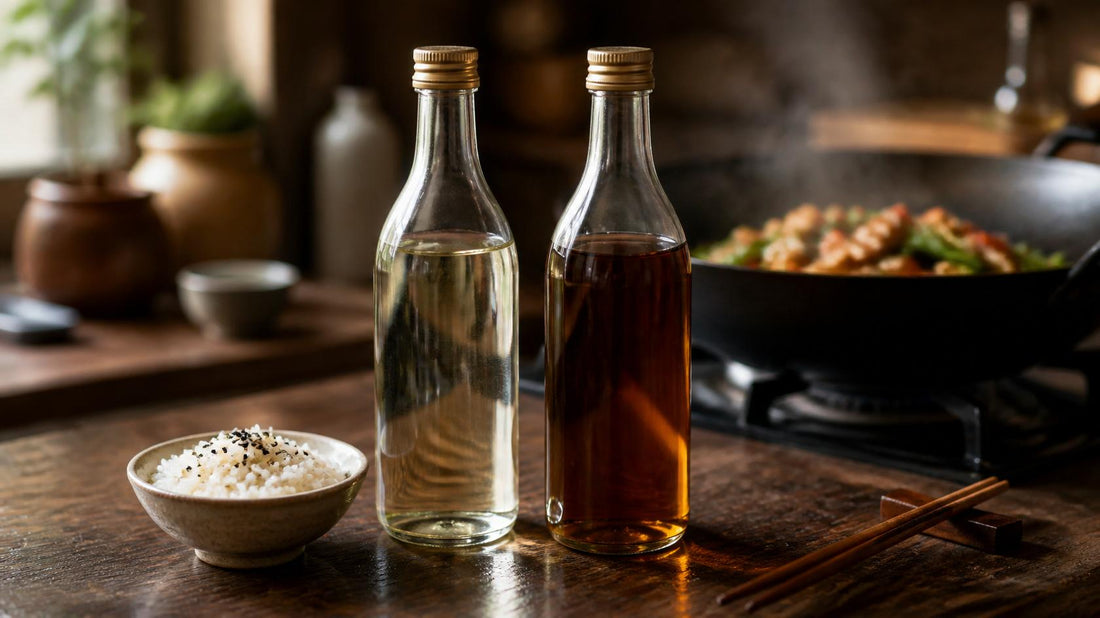
Rice vinegar and rice wine sit next to each other on the shelf, come in similar bottles, and both start with rice — so recipes that call for one are constantly ruined by the other. They are not the same thing, they are not interchangeable, and the difference is simple once you know it. Here it is.
What is rice vinegar?
Rice vinegar is rice wine that has been fermented a second time, turning the alcohol into acetic acid. The result is a mild, gently sweet vinegar — softer and less sharp than white wine vinegar, with a clean flavour that seasons without bullying.
You will meet it most often in Japanese cooking (it is what seasons sushi rice) and in Chinese dressings, pickles and dipping sauces. It comes in a few forms:
- Plain (white) rice vinegar — the everyday bottle, clear and mild.
- Seasoned rice vinegar — pre-mixed with salt and sugar, intended as a shortcut for sushi rice. Taste before you add extra seasoning.
- Black rice vinegar — a Chinese vinegar (Chinkiang is the famous one) with a deep, malty, almost smoky flavour. A different ingredient entirely; brilliant in dumpling dipping sauces.
What is rice wine?
Rice wine is rice fermented into alcohol — closer to beer than to grape wine in how it is made. In the kitchen it is used to add fragrance, depth and a little sweetness, and to take the edge off strong-smelling ingredients like pork, fish and offal. The two you will see most in recipes:
- Shaoxing wine — the great Chinese cooking wine, amber-coloured and nutty. A splash goes into marinades, stir-fries, braises and dumpling fillings. If a Chinese recipe says "rice wine" with no other detail, it means Shaoxing.
- Mirin — the sweet Japanese rice wine used for glazes, teriyaki and simmered dishes. Much sweeter and lower in alcohol than Shaoxing. We have a separate guide to mirin and its substitutes.
Sake is also a rice wine, though in Japanese home cooking it is used more like Shaoxing — for steaming fish and adding depth to broths — than as a substitute for mirin.
The key differences at a glance
| Rice vinegar | Rice wine | |
|---|---|---|
| What it is | Rice wine fermented again into acid | Rice fermented into alcohol |
| Tastes like | Mild, tangy, slightly sweet | Nutty, aromatic, sometimes sweet |
| Alcohol? | Effectively none | Yes — around 14–17% |
| Job in the dish | Adds brightness and acidity | Adds fragrance and depth; softens strong flavours |
| Classic uses | Sushi rice, pickles, dressings, dipping sauces | Marinades, stir-fries, braises, glazes |
Can you swap one for the other?
No — this is the one rule worth remembering. Vinegar where a recipe wants wine will make the dish sour and strip out its aroma. Wine where a recipe wants vinegar will leave it flat and boozy-sweet with no brightness. They do opposite jobs.
If you are missing one, better swaps are:
- For rice vinegar: white wine vinegar or apple cider vinegar at about three-quarters of the amount, with a small pinch of sugar to soften it.
- For Shaoxing wine: dry sherry is the classic stand-in, used one-for-one. Our Shaoxing wine substitute guide covers all the options, including alcohol-free ones.
- For mirin: see the mirin substitute guide — rice vinegar plus sugar is one of the options.
How to cook with each
Rice vinegar goes in at the end or off the heat: fold it through just-cooked sushi rice, whisk it into a dressing, splash it into a dipping sauce with soy and sesame oil. Long boiling drives off the very aroma you added it for.
Rice wine goes in early: into the marinade, or into the wok just after the aromatics so the alcohol sizzles off and leaves its fragrance behind. A tablespoon in a stir-fry or braise is usually plenty — it is a background note, not a sauce.
Which to buy
One bottle of each covers nearly every Chinese and Japanese recipe you are likely to cook:

Japan's best-known rice vinegar — mild and clean. The right bottle for sushi rice, pickles and dressings.
View product →
Yutaka Shaoxing Rice Wine 150ml
The essential Chinese cooking wine in a handy small bottle — a tablespoon at a time transforms marinades and stir-fries.
View product →Both live alongside mirin, sake and black vinegar in our Chinese and Japanese ingredients collections.
Rice vinegar and rice wine FAQs
Is rice wine vinegar the same as rice vinegar?
Yes — they are two names for the same thing. "Rice wine vinegar" just describes how it is made: rice wine, fermented again into vinegar.
Is mirin a rice wine or a rice vinegar?
A rice wine — a sweet one. It is nothing like vinegar, so do not use it where a recipe asks for rice vinegar (or vice versa).
Can I use rice vinegar instead of Shaoxing wine?
No. The dish will turn sour and lose the wine's nutty aroma. Use dry sherry instead, or see our Shaoxing substitutes.
Does rice vinegar contain alcohol?
No meaningful amount — the second fermentation converts the alcohol into acetic acid. It is a good choice when you are avoiding alcohol entirely.
How long do they keep?
Rice vinegar keeps for years in a cool cupboard. Rice wine is best within a year of opening; keep it sealed and away from heat, and the flavour will hold well.