


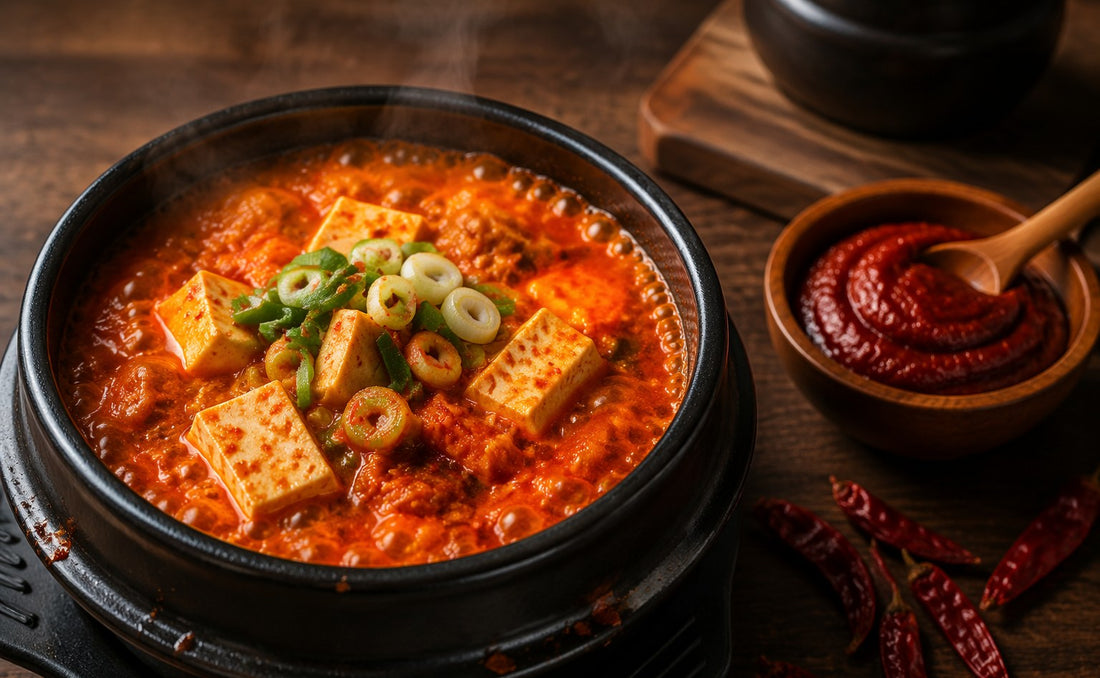
You've seen it in every Korean cooking video: the little red tub that goes into marinades, stews, dipping sauces and just about everything else. That's gochujang — Korea's fermented chilli paste — and once you have a tub in the fridge, you'll reach for it far more often than you expect.
This guide covers what gochujang is, what it tastes like, six easy ways to use it, what to do if you can't find any, and how to choose the right tub for your kitchen.
What is gochujang?
Gochujang (고추장) is a thick, fermented Korean chilli paste made from four core ingredients: red chilli powder, glutinous rice, fermented soybeans and salt. The mixture is traditionally aged for months in large earthenware pots called jangdok, which is where the paste develops its deep, complex flavour.
That fermentation is what sets gochujang apart from ordinary chilli sauces. It's not just hot — it's sweet from the rice, savoury from the soybeans and packed with umami, all in one spoonful. Think of it less as a hot sauce and more as a seasoning base, closer to miso than to sriracha.
What does gochujang taste like?
Sweet, savoury and gently spicy, with a rich fermented depth. The texture is thick and sticky — somewhere between tomato purée and peanut butter — so it's usually loosened with water, vinegar or sesame oil before it's used as a sauce or dip.
How hot is it? Moderately. Most gochujang sits around medium heat: a warming, rounded spice rather than a sharp burn. Heat does vary by brand, and mild versions are widely available if you prefer things gentler — the Daesang mild gochujang is a good example.
6 easy ways to use gochujang
Start with about a tablespoon per dish — gochujang is concentrated, and you can always add more.
- Bibimbap sauce. The classic. Mix 2 tablespoons of gochujang with 1 teaspoon of sesame oil, 1 teaspoon of sugar and a splash of warm water. Drizzle over rice, vegetables and a fried egg, then stir everything together. Add a side of kimchi and dinner's done.
- Tteokbokki (spicy rice cakes). Simmer Korean rice cakes in a sauce of gochujang, sugar, soy sauce and water for 10 minutes. Short on time? A ready-made tteokbokki sauce does the same job in one step.
- Korean BBQ marinades. Combine gochujang with soy sauce, sesame oil, garlic, ginger and a little sugar for bulgogi beef or spicy pork. Full method in our Korean BBQ at home guide.
- Stews and soups. A spoonful transforms kimchi jjigae, sundubu (soft tofu stew) and ramen broths. Stir it in early so it melts into the stock.
- Dips and dressings. Loosen gochujang with rice vinegar and sesame oil for a punchy salad dressing, or mix it with mayonnaise for an instant dip. For a ready-made version, ssamjang — gochujang's cousin, blended with soybean paste — is the dipping sauce Koreans serve with lettuce wraps.
- Glazes. Brush gochujang mixed with honey and soy over chicken wings, salmon or roast aubergine for the last 10 minutes of cooking. It caramelises beautifully.
Gochujang vs gochugaru vs sriracha
These three are often confused, but they do different jobs:
| What it is | Flavour | Best for | |
|---|---|---|---|
| Gochujang | Fermented chilli paste | Sweet, savoury, umami, medium heat | Marinades, stews, sauces, dips |
| Gochugaru | Dried Korean chilli flakes | Clean, smoky, dry heat | Kimchi-making, seasoning, garnishes |
| Sriracha | Thai-style chilli sauce | Sharp, garlicky, vinegary heat | Squeezing over finished dishes |
The key difference: gochujang adds body, sweetness and umami as well as heat, so it isn't interchangeable with gochugaru or sriracha. If a Korean recipe calls for gochujang, it's worth getting the real thing. Our sambal vs sriracha guide covers the other two red pastes people mix up.
Gochujang substitutes
Nothing matches gochujang exactly, but in an emergency you can get close:
- Best makeshift: mix 1 tablespoon of sriracha with 1 teaspoon of miso paste and a pinch of sugar. You get the heat, the fermented depth and the sweetness in roughly the right proportions.
- Simpler option: chilli paste or sambal oelek with a dash of soy sauce and sugar. Less depth, but the right shape of flavour.
- What won't work: plain chilli powder or hot sauce on its own — you'll get heat without the sweetness or umami that make a dish taste Korean.
Honestly? Substitutes are fine for one meal, but a tub costs a few pounds, keeps for months in the fridge and makes weeknight cooking far more interesting. It's worth having.
How to store gochujang
Unopened, gochujang keeps in the cupboard for over a year — check the date on the tub. Once opened, keep it in the fridge with the lid pressed down firmly, where it will last for several months. Use a clean, dry spoon each time.
Don't worry if the surface darkens over time — that's oxidation, not spoilage, and it's normal for fermented pastes. If it ever smells off or grows mould, then it's time for a new tub.
Where to buy gochujang in the UK
You'll find gochujang in most Asian supermarkets and some larger supermarkets — and right here at Tuk Tuk Mart, with nationwide delivery. Three tubs worth knowing about:

The ideal first tub — small enough to try without committing, from a brand you'll recognise from UK supermarkets.
View product →
Our best-value everyday tub from one of Korea's biggest sauce makers. The sweet spot between size and freshness.
View product →
The family-size tub for regular Korean cooking — milder heat, so everyone at the table can enjoy it.
View product →Browse our full Korean ingredients collection — including doenjang (soybean paste) and ssamjang, the other two pastes every Korean kitchen keeps alongside gochujang.
Gochujang FAQs
What is gochujang?
A fermented Korean chilli paste made from red chilli powder, glutinous rice, fermented soybeans and salt. It's sweet, savoury, spicy and full of umami.
How do you use gochujang?
Stir it into marinades, stews and soups, mix it into bibimbap or tteokbokki sauce, or loosen it with water or vinegar for dips, dressings and glazes. Start with about a tablespoon.
How spicy is gochujang?
Moderately spicy, with a warming heat balanced by sweetness and fermentation — usually milder and more rounded than raw chilli. Heat varies by brand.
What is the difference between gochujang and gochugaru?
Gochujang is a fermented chilli paste; gochugaru is dried chilli flakes or powder. Gochujang adds sweetness, body and umami, while gochugaru adds dry chilli heat. They aren't interchangeable.
Does gochujang need refrigerating?
Yes — once opened, keep it in the fridge, where it will last for several months.
Keep exploring
Put your new tub to work with our beginner's guide to Korean BBQ at home, or brush up on more Asian store-cupboard essentials: dark vs light soy sauce, fish sauce vs oyster sauce and the best Shaoxing wine substitutes.