


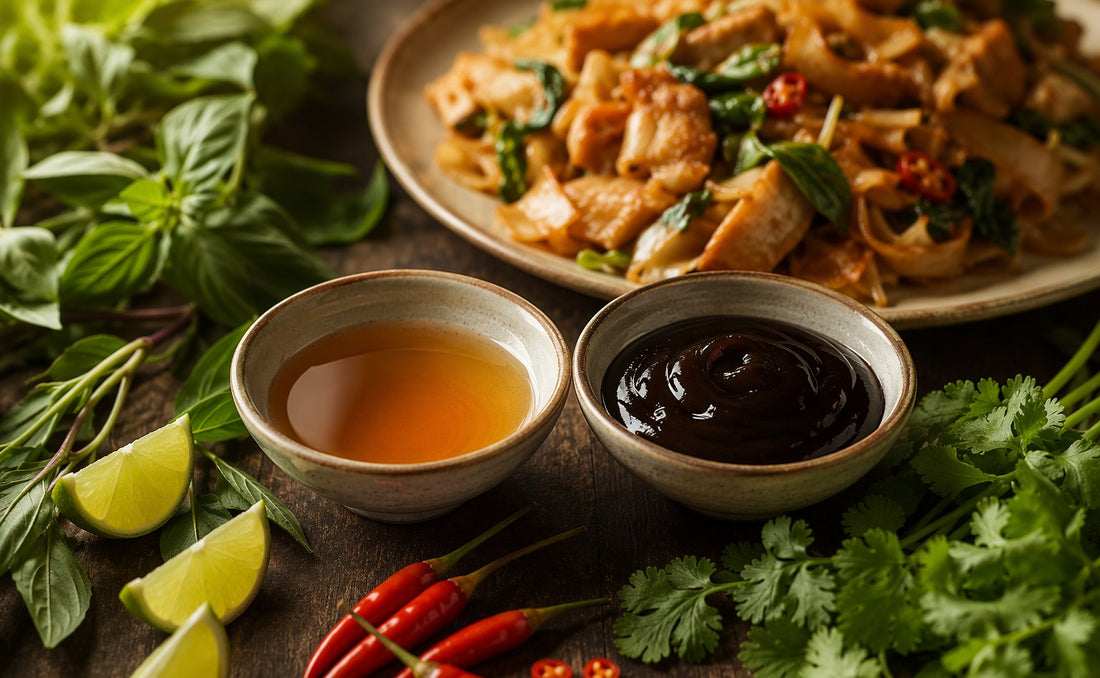
If you have ever stood in an Asian grocery aisle wondering whether to reach for the fish sauce or the oyster sauce, you are not alone. Both are used across Chinese, Thai, Vietnamese and other South East Asian cooking. Both add depth and savouriness. But they are made differently, taste different, and are used in very different ways.
What is fish sauce?
Fish sauce is a liquid condiment made from fish — typically anchovies — fermented with salt over months or years. The result is a thin, amber-coloured liquid with an intensely salty, deeply savoury (umami) flavour and a pungent smell straight from the bottle.
Despite that smell, fish sauce disappears into a dish when cooked, leaving a rounded saltiness and umami depth that is almost impossible to replicate with anything else. It is the backbone of Thai, Vietnamese, Filipino and Cambodian cooking.
Key brands to know: Tiparos and Squid Brand are widely used Thai fish sauces. Phu Quoc from Vietnam is regarded as one of the finest.
What is oyster sauce?
Oyster sauce is a thick, dark, slightly sweet sauce made from oyster extracts, sugar, salt and thickeners. It was invented in southern China and remains a cornerstone of Cantonese cooking. Unlike fish sauce it has a mild, sweet-savoury flavour and a syrupy texture — more a glaze than a seasoning liquid.
The pungency of fish sauce is absent here. Oyster sauce smells faintly briny and sweet, and most people find it immediately approachable. Lee Kum Kee is the most widely recognised brand.
Fish sauce vs oyster sauce — side by side
| Property | Fish sauce | Oyster sauce |
|---|---|---|
| Made from | Fermented fish (anchovies) | Oyster extracts, sugar, salt |
| Texture | Thin liquid | Thick, syrupy |
| Colour | Amber to golden brown | Dark brown, almost black |
| Flavour | Intensely salty, deeply savoury | Mildly sweet, rich, savoury |
| Smell | Pungent when raw; disappears when cooked | Mild, faintly briny |
| Cuisines | Thai, Vietnamese, Filipino, Cambodian | Chinese, Cantonese, stir-fry cooking |
| Common uses | Marinades, dipping sauces, soups, curries | Stir-fries, glazes, noodles, vegetables |
When to use fish sauce
Fish sauce is for anywhere you want salt with added umami depth — particularly in cuisines where it replaces soy sauce as the primary seasoning.
Thai curries and soups
Tom yum, green curry, pad thai and som tum all call for fish sauce as the primary seasoning. It provides the saltiness and depth that define these dishes.
Vietnamese dipping sauces
Nước chấm, the all-purpose Vietnamese dipping sauce, is built on fish sauce, lime, sugar and chilli. It accompanies summer rolls, grilled meats and rice dishes.
Marinades
Fish sauce makes an outstanding marinade for chicken, pork and beef, particularly for grilling or barbecuing. Use it in place of soy sauce for a more complex result.
Anywhere you want extra umami
A small dash in a pasta sauce, a roast gravy or a salad dressing adds savoury depth without tasting fishy. Plenty of chefs use it as a quiet umami boost.

The Thai kitchen standard — clean, salty and reliable. A good first bottle if you are starting out.
View product →When to use oyster sauce
Oyster sauce is the go-to for Chinese and Cantonese cooking, particularly anywhere you want a glossy, savoury glaze.
Stir-fries
Oyster sauce is the defining ingredient in Chinese stir-fry sauce. Combined with light soy sauce, sesame oil and a little sugar, it creates the glossy, restaurant-quality finish that coats every ingredient evenly.
Blanched vegetables
In Cantonese cooking, steamed or blanched vegetables — particularly Chinese broccoli (gai lan) — are served simply with a drizzle of oyster sauce over the top.
Noodle dishes
Lo mein, chow mein and beef noodles all use oyster sauce as a key component of the sauce. It clings to the noodles and gives that characteristic glossy coating.
Braised meats
Oyster sauce is excellent in slow braises — it caramelises beautifully and adds colour and richness to the cooking liquid.

Lee Kum Kee Premium Oyster Sauce 510g
The benchmark oyster sauce — richer and less sweet than the Panda label, and the one most Cantonese kitchens reach for.
View product →Can you substitute one for the other?
They are not direct substitutes, and swapping one for the other will noticeably change your dish.
If you are out of fish sauce: light soy sauce is the closest substitute for saltiness and umami, though it lacks the depth of fermented fish. Use slightly less, as soy sauce can be saltier. A tiny amount of Worcestershire sauce (which contains anchovies) also helps approximate the flavour. Our full guide to fish sauce substitutes ranks six options with exact ratios.
If you are out of oyster sauce: hoisin sauce is closest in texture and sweetness, though the flavour profile differs. Dark soy sauce mixed with a pinch of sugar approximates some of the colour and sweetness in a pinch.
Fish sauce and oyster sauce FAQs
Is fish sauce the same as oyster sauce?
No. Fish sauce is a thin, intensely salty liquid made from fermented anchovies. Oyster sauce is a thick, mildly sweet sauce made from oyster extracts. They have different flavours, textures and uses.
Can I use fish sauce instead of oyster sauce in a stir-fry?
Not as a direct substitute. Fish sauce adds saltiness and umami but will not give the thick, glossy coating oyster sauce provides. If you must substitute, use a little soy sauce with a pinch of sugar and a cornflour slurry to approximate the texture.
Does fish sauce taste fishy?
Straight from the bottle it smells pungent. Once cooked, the fishy notes largely disappear, leaving a rounded saltiness and depth. Most people cannot identify fish sauce in a finished dish.
Is oyster sauce suitable for pescatarians?
Oyster sauce contains oyster extract, so it is not suitable for vegans or vegetarians, but it is suitable for pescatarians. Vegetarian alternatives made from mushrooms are widely available and give a similar effect.
Browse the full Asian sauces collection for fish sauce, oyster sauce, soy sauce and everything in between.