


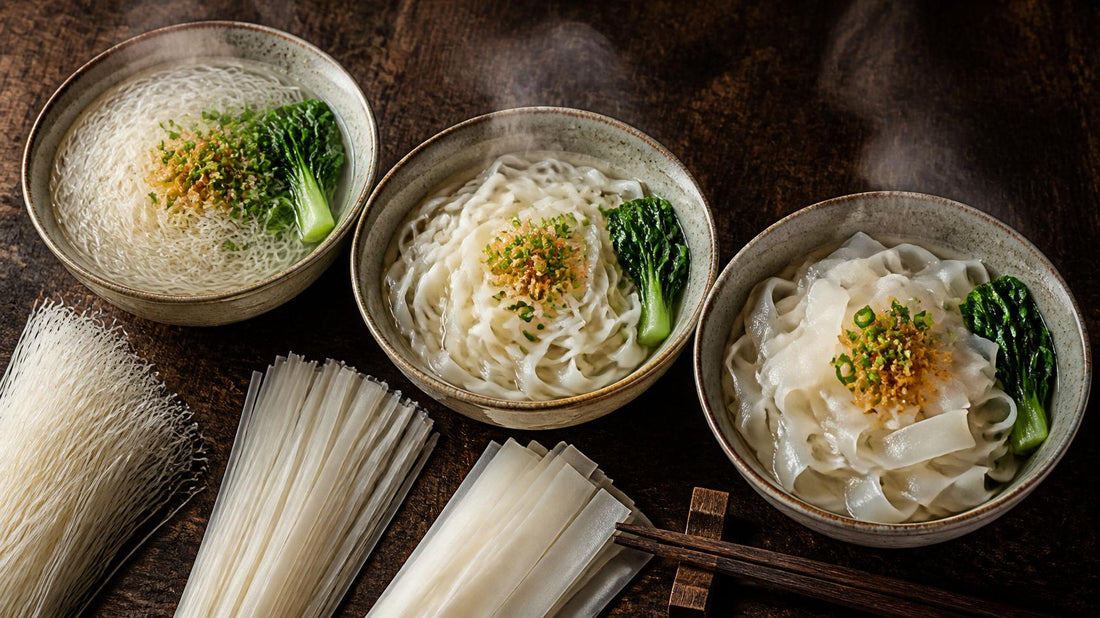
Stand in front of the noodle shelf and rice noodles alone come in half a dozen widths, fresh and dried, under three different names. The good news: they all come from the same simple dough of rice flour and water, and choosing between them is mostly about matching the width to the dish. Here is the whole family, and which one to buy for what you are cooking.
What are rice noodles?
Rice noodles are made from rice flour and water, sometimes with a little tapioca or corn starch for extra spring. That makes them naturally gluten-free (do check labels if it matters — a few brands blend in wheat) and gives them their characteristic soft, slippery chew. They are the everyday noodle across Thailand, Vietnam, southern China and beyond.
Unlike wheat noodles, rice noodles are not boiled from dry in the usual way — more on that below, because it is where most people go wrong.
The main types, from thinnest to widest
Rice vermicelli (bún, bee hoon, mai fun — roughly 1mm)
Thin as angel hair, sold in brittle nests or straight bundles. Vermicelli cooks in minutes and goes into Vietnamese spring rolls and noodle salads (bún), Singapore noodles, and light soups. Because it is so fine it soaks up dressing quickly — dress it generously.
Small and medium rice sticks (1–3mm)
The all-rounders. This width takes well to stir-frying and soup equally, and it is the size you will find in a quick weeknight pad see ew or a bowl of Vietnamese phở when the cook wants a lighter noodle. If you are only going to keep one pack in the cupboard, a medium 3mm stick is the most useful.
Wide rice sticks (5mm — the pad thai and phở noodle)
The classic flat ribbon. Five millimetres is the traditional width for pad thai and for phở — sturdy enough to toss hard in a wok without snapping, soft enough to slurp. Many packs are simply labelled "rice stick" with the width in millimetres, so check the number. And if pad thai is the plan, the sauce lives and dies on tamarind — our tamarind guide explains why.
Extra-wide rice noodles (10mm and up — ho fun, kway teow, sen yai)
The big, broad sheets used for pad see ew, char kway teow and beef chow fun. Dried versions work well, but fresh ho fun (sold chilled in folded sheets) is the real treat — silky, tender and ready in seconds. Separate the strands gently before cooking or they clump.
Fresh vs dried
Dried noodles keep for a year in the cupboard and need soaking or brief boiling. Fresh noodles are softer, quicker and taste better, but keep only days in the fridge and can turn brittle if chilled too hard — let them come up to room temperature and they will separate again. For wide noodles in particular, fresh is worth it when you can get it.
Which width for which dish
| Dish | Noodle |
|---|---|
| Pad thai | 5mm rice stick |
| Phở | 5mm rice stick (bánh phở) |
| Pad see ew / char kway teow | 10mm or fresh ho fun |
| Singapore noodles | Rice vermicelli |
| Vietnamese spring rolls / bún salads | Rice vermicelli |
| Thai boat noodles / quick soups | 1–3mm rice stick |
Honestly, the widths are forgiving. A 3mm noodle in pad thai is a slightly lighter pad thai, not a failed one — use what you have.
How to cook rice noodles without them going mushy
This is the single most useful skill with rice noodles, and it is counterintuitive: for stir-fries, soak rather than boil.
- Stir-fries (pad thai, pad see ew, Singapore noodles): soak dried noodles in warm (not boiling) water until pliable but still firm to the bite — about 20–30 minutes for medium sticks, 5–10 for vermicelli. Drain. They finish cooking in the wok, where they absorb the sauce instead of water. Boiling first is how you get a wok full of mush.
- Soups (phở, noodle soup): soak as above, or drop the noodles straight into boiling water for a minute or two less than the packet says. They keep softening in the hot broth at the table.
- Fresh noodles: just rinse in warm water to separate, then add at the very end — they need barely a minute.
Two more tips: rinse soaked noodles in cold water if you are not cooking them immediately (it stops them sticking), and never soak in aggressively boiling water — the outsides disintegrate before the centres soften.
Which to buy
A medium stick for the cupboard, plus vermicelli for salads and spring rolls, covers almost everything:

Kirin Rice Stick Medium (3mm) 400g
The everyday all-rounder for stir-fries and soups. The same range comes in 1mm, 5mm and 10mm when a recipe wants a specific width.
View product →
Fine noodles for spring rolls, bún salads and Singapore noodles — ready in minutes and naturally gluten-free.
View product →Browse every width, plus fresh noodles, wheat noodles and instant options, in our noodles collection.
Rice noodle FAQs
Are rice noodles gluten-free?
Pure rice noodles are — they are made from rice flour and water. A few brands add wheat starch, so if you are coeliac or avoiding gluten strictly, check the ingredients list on the pack.
Do you boil rice noodles before stir-frying?
No — soak them in warm water until pliable but still firm, then let them finish in the wok. Boiled-then-fried rice noodles turn mushy and break apart.
What is the difference between rice noodles and glass noodles?
Glass (cellophane) noodles are made from mung bean or sweet potato starch, not rice. They cook up transparent and springy, while rice noodles stay white and soft. They are not interchangeable in texture, though either works in a pinch in soups and salads.
Why did my rice noodles turn to mush?
Almost always one of two things: the soak water was boiling rather than warm, or they were soaked too long. Aim for pliable-but-firm, and remember they keep softening in the wok or the broth.
How long do dried rice noodles keep?
A year or more in a cool, dry cupboard in a sealed pack. Fresh rice noodles keep only a few days in the fridge and do not freeze well.