


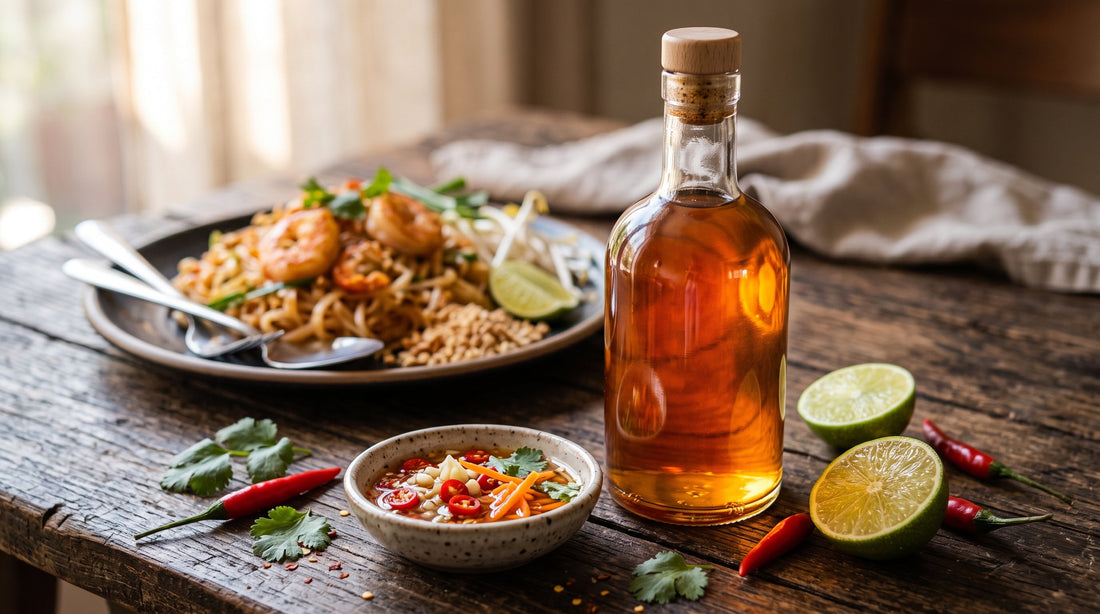
Fish sauce is the single most important seasoning in Thai and Vietnamese cooking — a clear amber liquid made from fermented fish that adds a deep, savoury, can't-quite-name-it richness to everything it touches. If your pad thai or green curry has ever tasted flat compared to a restaurant's, missing fish sauce is the usual reason. Here is what it is, how to choose one, and how to use it.
What is fish sauce?
Fish sauce is made from just two ingredients: fish (usually anchovies) and salt, layered in barrels and left to ferment for months — sometimes over a year. The liquid that slowly drains off is fish sauce. The first pressing, like first-press olive oil, is the finest quality.
It smells assertive in the bottle — there is no pretending otherwise — but in cooking that pungency transforms into pure savoury depth. Used properly, nobody will know it is there. They will just know the food tastes better.
In Thai it is nam pla; in Vietnamese, nuoc mam. You will see both names on bottles, and both mean the same thing.
What does fish sauce taste like?
Salty first, then deeply savoury — the word is umami — with a subtle sweetness and complexity that plain salt cannot give. Think of what parmesan or anchovy does in Italian food: fish sauce is that, for South East Asian cooking. It rarely makes a dish taste "fishy"; used in normal amounts, it simply makes everything taste more like itself.
How to use fish sauce: 6 everyday ways
- Season curries and stir-fries. Add it near the end of cooking, a teaspoon at a time, tasting as you go. It replaces salt — so if a recipe has both, add the fish sauce first.
- Pad thai sauce. The classic trio is fish sauce, tamarind and palm sugar. Salt, sour, sweet — that balance is the whole dish.
- Dipping sauce (nuoc cham). Fish sauce, lime juice, sugar, water, garlic and chilli. The table sauce of Vietnam, ready in two minutes.
- Marinades. Fish sauce with garlic, sugar and pepper is the base marinade for Thai grilled chicken and Vietnamese pork chops.
- Soups and broths. A splash in a clear soup or noodle broth adds depth without clouding it.
- Beyond Asian food. A few drops in a bolognese, a Caesar dressing or a beef stew is a chef's trick — invisible, but noticeably richer.
How to choose a good fish sauce
The label tells you most of what you need to know:
- Short ingredient list. The best bottles list fish, salt and perhaps a little sugar. Long lists with flavour enhancers and preservatives mark the cheaper end.
- "First press" or a degrees-N number. Some premium bottles state nitrogen degrees (°N) — 30°N and above indicates a richer, more concentrated sauce.
- Colour. Clear and amber is good. Murky or very dark usually means a harsher sauce.
- Match the cuisine. Thai-style sauces (Squid, Tiparos, Healthy Boy) are saltier and bolder; Vietnamese-style nuoc mam tends to be smoother and slightly sweeter. Both work everywhere — it is a matter of taste.
Fish sauce substitutes
Nothing replicates it exactly, but if you need a stand-in:
- Light soy sauce — the closest everyday swap, at roughly 1:1. You lose the fermented depth; a splash of lime helps.
- Soy sauce plus a little miso or mushroom powder — a better vegan approximation of the umami.
- Vegan "fish sauce" — made from seaweed, mushrooms or soy. The category has improved enormously and now works well in dressings and dipping sauces.
- Worcestershire sauce — it contains anchovies, so in a cooked dish a small amount gestures in the right direction.
We cover the differences between fish sauce and its closest shelf-neighbour in our fish sauce vs oyster sauce guide.
Our fish sauce picks

The iconic Thai bottle — bold, salty and dependable. The one most Thai home cooks grew up with.
View product →
The restaurant-sized bottle. If fish sauce is a staple in your kitchen, this is the value buy.
View product →
Samui Fish Sauce (Vegan) 200ml
All the savoury depth, no fish — for plant-based Thai and Vietnamese cooking.
View product →Browse the full Thai collection for the curry pastes, coconut milk and palm sugar to go with it.
Fish sauce FAQs
Does fish sauce go off?
Practically never. The salt content makes it extremely shelf-stable — an opened bottle keeps for a year or more in the cupboard. It may darken and grow saltier over time; that is normal, not spoilage. Refrigeration is optional.
Why does fish sauce smell so strong?
Fermentation. The aroma is assertive in the bottle but mellows completely once cooked or diluted into a dressing. Judge it in the finished dish, not from the bottle.
Is fish sauce gluten free?
Pure fish sauce — fish, salt, maybe sugar — is naturally gluten free. Always check the label, as a few cheaper brands add flavourings that may contain gluten. (Note that soy sauce, the usual substitute, usually is NOT gluten free unless labelled.)
There are crystals in my fish sauce — is that normal?
Yes. Salt crystals or a little sediment at the bottom are signs of a naturally fermented sauce. Shake the bottle and carry on.
How much fish sauce should I use?
Less than you think. Start with a teaspoon in a stir-fry for two, taste, and add more. You can always add; you cannot take away.