


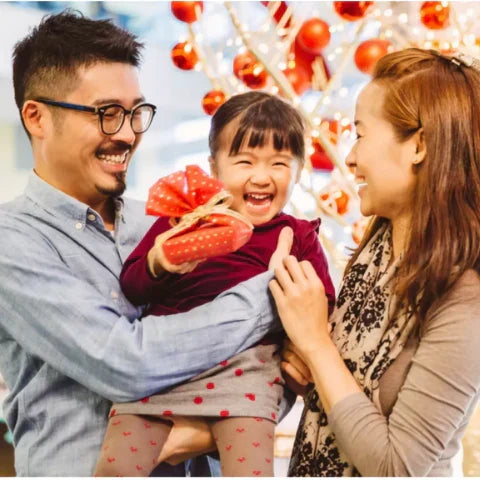
If you spend December in China, you'll see Christmas trees, hear "Jingle Bells" in shopping centres and spot Santa hats everywhere — yet almost nobody gets the day off. Christmas in China is a fascinating mix of imported imagery and home-grown traditions, and some of them are genuinely lovely.
Here's how China really celebrates Christmas: the peace apple tradition, why it's a couple's holiday, what people actually eat, and how it compares to the festival that truly matters — Chinese New Year.
Is Christmas celebrated in China?
Yes and no. Christmas Day is not a public holiday in mainland China — schools, offices and shops stay open as normal. (Hong Kong and Macau are the exceptions: both get public holidays over Christmas, a legacy of their colonial history.)
But that doesn't mean Christmas passes unnoticed. In big cities, shopping centres put up enormous trees and light displays, shops run Christmas promotions, and younger generations have adopted the day in their own way — less as a religious festival, more as a fun, romantic occasion to go out, exchange gifts and enjoy the lights. Think of it as China's second Valentine's Day rather than a family holiday.
China's unique Christmas traditions
1. Giving "peace apples" on Christmas Eve
This is China's most charming Christmas invention. Christmas Eve in Mandarin is píng'ān yè (平安夜) — "a peaceful night" — and the word for apple, píngguǒ (苹果), sounds almost identical to the word for peace. So on Christmas Eve, people give each other apples, often dressed up in decorative boxes, cellophane and ribbons.
Shops sell specially packaged "peace apples" in the run-up to the 24th, and friends, classmates and couples exchange them as a wish for a safe and peaceful year ahead. It's a pun turned into a national tradition — and a very easy one to adopt at home.
2. A day for couples, not family
Where British Christmas means turkey with the relatives, Chinese Christmas is closer to Valentine's Day. Young couples go out for dinner, see the lights, take photos and exchange small gifts. Christmas Eve is one of the busiest restaurant nights of the year in big Chinese cities.
3. Decorations everywhere — just not at home
The decorations go up in malls, shops and restaurants rather than living rooms. You'll find towering trees, fake snow and animatronic Santas in city shopping centres from late November, and Christmas markets have started appearing in the biggest cities. Home decorating is far less common — most families save their serious decorating for Chinese New Year.
4. Christmas dinner? Not quite
There's no traditional Chinese Christmas dinner, and turkey barely features. Instead, friends and family who do gather tend to eat the foods Chinese celebrations are actually built on — a bubbling hot pot in the middle of the table, or a batch of homemade dumplings. Warm, communal and perfect for December.

Christmas vs Chinese New Year
To understand Christmas in China, it helps to know what it's up against. Chinese New Year (the Spring Festival) is the real giant — the largest annual human migration on Earth, as hundreds of millions travel home for the reunion dinner.
Chinese New Year has the things Christmas never developed in China: deep family meaning, centuries of ritual, lucky red decorations everywhere, and red packets (hóngbāo) filled with money for children and unmarried relatives. It falls between late January and mid-February, and if Christmas in China is the warm-up act, this is the headline show. You can browse our Chinese New Year collection to see what the celebrations involve.

Chinese New Year Red Packets (6 pack)
The classic fortune-design hóngbāo, ready for Chinese New Year — or for gifting money the traditional way at any celebration.
View product →Celebrate with a Chinese twist
Fancy borrowing a few of these traditions? Three easy ways to do it:
- Give someone a peace apple on Christmas Eve. Wrap a beautiful apple in cellophane with a ribbon and a note wishing them a peaceful year. Simple, thoughtful, and a great story.
- Swap one December dinner for a hot pot night. A pot of simmering broth in the middle of the table, everyone cooking their own — it's the most sociable meal we know. A Haidilao hot pot soup base is the easiest place to start.
- Have a dumpling party. Folding dumplings together is how countless Chinese families celebrate. Short on time? Good frozen dumplings steam in minutes — har kau (prawn dumplings) and siu mai turn any evening into a dim sum spread.

Haidilao Hot Pot Soup Base 110g
From China's most famous hot pot chain — a gentle, savoury broth base that suits everyone at the table.
View product →Christmas in China FAQs
Is Christmas a public holiday in China?
No — not in mainland China, where schools and workplaces stay open as normal. Hong Kong and Macau both treat Christmas as a public holiday.
What is a peace apple?
An apple given as a gift on Christmas Eve. The Chinese for Christmas Eve, píng'ān yè (peaceful night), and the word for apple, píngguǒ, sound alike — so apples became the symbol of a peaceful year ahead.
Do Chinese families eat turkey at Christmas?
Generally no. There's no set Christmas meal in China; gatherings are more likely to centre on hot pot, dumplings or a restaurant dinner than a roast.
Why do Chinese couples treat Christmas like Valentine's Day?
Because in China the festival arrived as a secular, commercial occasion rather than a religious or family one — so it naturally became a day for dates, gifts and going out, much like Valentine's Day in the West.
What is China's biggest festival?
Chinese New Year (Spring Festival), falling between late January and mid-February. It's the event Chinese families save their real celebrations — and decorations — for.
Keep exploring
Building a festive spread? Our guide to the top dim sum dishes covers the classics, and the Chinese New Year collection has everything for the main event in January. For more Chinese kitchen inspiration, try our perfect egg fried rice or a Korean BBQ night at home.