


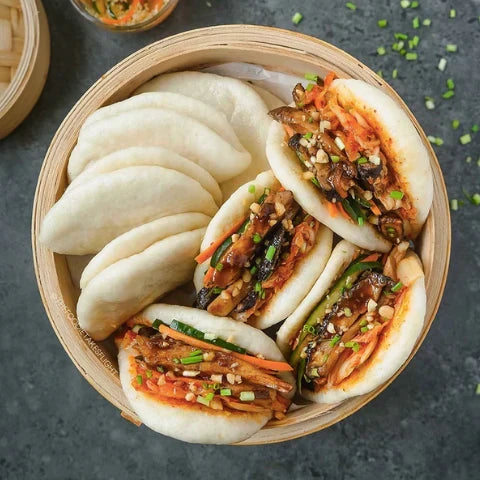
Pillowy, cloud-soft steamed buns look like the kind of thing only restaurants can make — but the dough is genuinely simple: flour, yeast, water and a little patience. The part most first-timers get wrong isn't the mixing, it's the steaming.
This recipe makes 10–12 buns, with everything you need to know about proving, folding and steaming — plus an honest shortcut for nights when you just want bao now.
What are bao buns?
"Bao" (包) simply means bun, and it covers a whole family of Chinese steamed breads. The three you'll meet most often:
- Baozi — round buns with an enclosed filling, classically char siu pork or a minced pork mixture.
- Mantou (馒头) — the plain, unfilled version: soft, slightly sweet steamed bread, perfect for mopping up sauces.
- Gua bao — the folded-over "bao sandwich" that took over street food menus, usually stuffed with braised pork belly, pickled greens and peanuts. This recipe works for all three shapes.
Ingredients

- 300g plain flour — low-protein flour gives the softest crumb; you'll find suitable flours in our flour range
- 1 teaspoon (5g) instant dried yeast
- 2 tablespoons sugar — feeds the yeast and adds that gentle bao sweetness
- 1 teaspoon baking powder — the secret to extra lift
- A pinch of fine salt
- 150–160ml warm water or milk — warm to the touch, around 40°C, never hot
- 1 tablespoon neutral oil, such as sunflower oil, plus extra for brushing
Equipment
A bamboo steamer is the traditional tool — bamboo absorbs condensation, so water doesn't drip back onto your buns. It sits over a wok or saucepan of simmering water. A metal steamer works too; just wrap the lid in a clean tea towel to catch drips.

10" Bamboo Steamer Set (2 tiers + lid)
Two tiers means a whole batch of bao in one go — and it's just as useful for dumplings, fish and vegetables.
View product →Line each tier with steamer paper (or squares of baking parchment) so the buns lift out cleanly.
Method
- Make the dough. Mix the flour, yeast, sugar, baking powder and salt in a large bowl. Add the warm water and oil, bring together into a shaggy dough, then knead for 8–10 minutes until smooth and elastic. It should feel soft, not sticky.
- First prove. Cover and leave in a warm spot for 1–2 hours, until doubled in size. A just-warmed (then switched-off) oven is ideal in a British winter kitchen.
- Shape. Knock the air out, knead briefly, then divide into 10–12 pieces. For round buns, roll each piece into a smooth ball. For gua bao, roll each into an oval about 8cm long, brush lightly with oil and fold in half over a chopstick, then slide the chopstick out.
- Second prove. Place the shaped buns on steamer paper, cover, and rest for 30 minutes. They'll puff up noticeably — this second rise is what makes them fluffy rather than dense.
- Steam. Bring the water to a boil, set the steamer over it and steam for 10–12 minutes. Do not open the lid — not even to peek.
-
Rest. Take the steamer off the heat and leave it, still covered, for 5 minutes before opening. Sudden temperature change is what makes bao collapse and wrinkle.

6 tips for light, fluffy bao
- Weigh your water. Too much water makes a slack dough that spreads instead of rising. Start with 150ml and add a splash more only if the flour won't come together.
- Warm, not hot. Water above 45°C kills yeast. If it's too hot to hold your finger in comfortably, it's too hot for the dough.
- Don't skip the second prove. Thirty minutes of patience here is the difference between pillowy and stodgy.
- Space them out. Buns expand by about half again during steaming — leave 3–4cm between them.
- Never open the lid mid-steam. The rush of cold air deflates them, and they won't recover.
- Rest before opening. Five minutes off the heat lets the structure set, so the buns stay plump instead of shrivelling.
Fillings to try
- Char siu pork — the classic sweet-savoury barbecue pork filling for round baozi.
- Braised pork belly — with pickled mustard greens and crushed peanuts in a folded gua bao.
- Fried chicken and sriracha mayo — the street-food van favourite.
- Crispy tofu — with hoisin, cucumber and spring onion for a meat-free version.
- Sweet fillings — custard or red bean paste turns the same dough into dessert bao.
The honest shortcut: frozen bao
Homemade is a lovely weekend project — but nobody should gatekeep a Tuesday-night bao craving. Good frozen buns steam in about 10 minutes straight from the freezer and taste remarkably close to fresh:

The folded sandwich style, ready to steam and stuff — the fastest route to bao night.
View product →
Kawan Lotus Leaf Buns (10 pack)
Soft, neutral lotus-leaf folds that go with absolutely anything — keep a bag in the freezer.
View product →Browse the full buns and bao range for filled options too — custard buns, char siu bao and more.
Bao buns FAQs
Why did my bao buns collapse or wrinkle?
Usually one of three things: the lid came off mid-steam, the buns went from hot steam to cold air too quickly (rest them 5 minutes first), or the dough was over-proved. Fix those three and wrinkled bao becomes rare.
Can I make bao without a steamer?
Yes — balance a heatproof plate on an upturned ramekin inside a deep lidded pan with an inch of simmering water. It works, though a bamboo steamer is an inexpensive upgrade that makes the job far easier.
Can I freeze homemade bao?
They freeze beautifully. Steam them first, cool completely, then freeze in a bag. Reheat by steaming from frozen for 8–10 minutes — they come back almost like fresh.
What's the difference between bao and mantou?
Mantou is the plain, unfilled steamed bread; bao (or baozi) usually means a filled bun. Same dough family, different destiny.
How long do steamed buns keep?
Best eaten within hours. Leftovers keep 2 days in the fridge — re-steam for 3–4 minutes to bring the softness back. Microwaving works in a pinch with a damp paper towel over the top.
More from the steamer
Got the steamer out? Keep going with our guide to the top dim sum dishes to try, or round out the meal with perfect egg fried rice and chicken lo mein.