


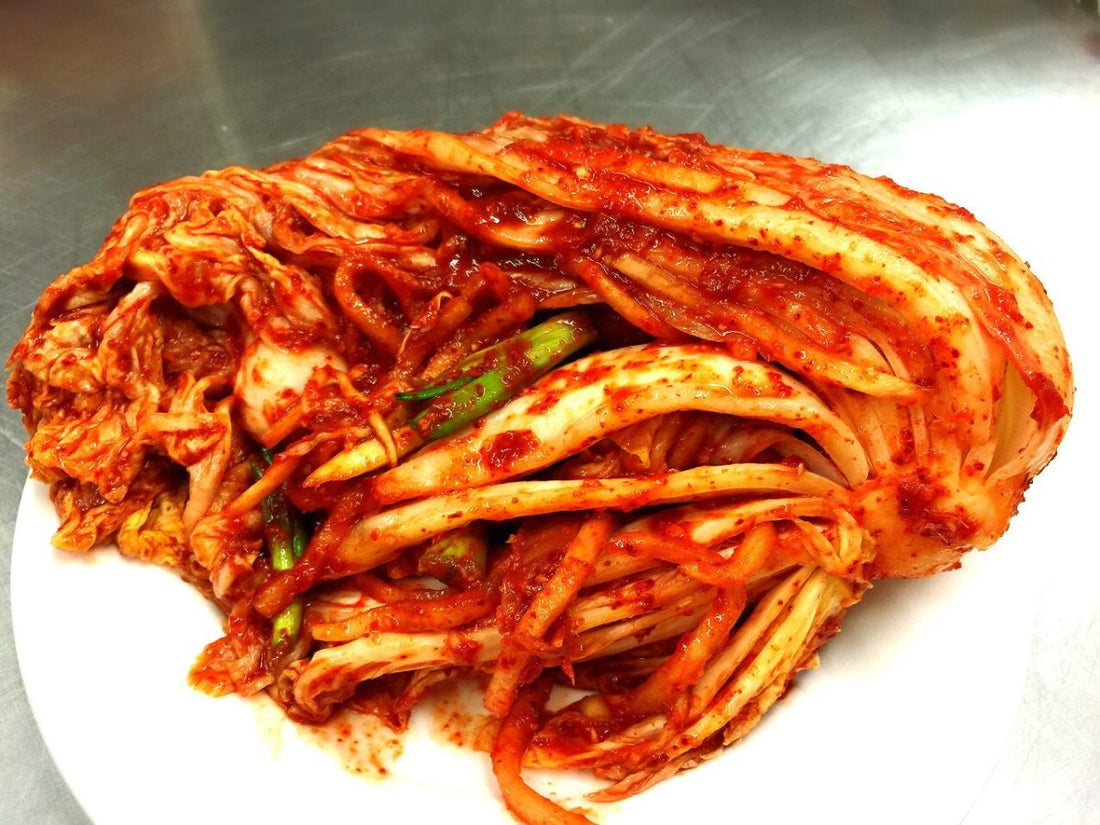
Kimchi is Korean fermented vegetables, most often napa cabbage or radish, seasoned with chilli, garlic, ginger and spring onion. There are many types: cut cabbage (mat kimchi), whole cabbage (poggi), cubed radish (kkakdugi), young radish (chonggak), radish leaves (yeolmu) and white kimchi without chilli. Keep chilled kimchi in the fridge, pressed down under its juices. It keeps fermenting and turns more sour over time, which is normal.
Quick answers
- Most common type: napa cabbage kimchi (baechu kimchi), sold cut into pieces as mat kimchi.
- Storage: chilled kimchi lives in the fridge, in a closed container, with clean utensils.
- How long it keeps: follow the date and any "once opened" line on the pack. It gets more sour as it ages.
- Fizzy or bulging? That's gas from fermentation. Open it slowly over the sink.
- Fish: many kimchis contain fish sauce or salted shrimp, so check the ingredients.
What is kimchi?
Kimchi (김치) is Korea's everyday side dish. Vegetables are salted, coated in a seasoning paste, then left to ferment. The chilli paste is usually made with Korean chilli powder, garlic, ginger and spring onion. Many recipes also add fish sauce or salted shrimp. As it ferments, kimchi turns from fresh and crunchy to tangy and sour.
It's eaten with rice at almost any meal, and cooked into stews, fried rice and pancakes.
Types of kimchi
Napa cabbage kimchi (baechu kimchi)
The kimchi most people mean. It comes in two styles:
- Mat kimchi (맛김치): cabbage cut into bite-sized pieces before packing, so it's ready to eat straight from the pack. Try CJ Bibigo sliced napa cabbage kimchi 500g, one of our best-selling kimchis over the past year, Jongga sliced napa cabbage kimchi 200g or Wang Korea cabbage kimchi 410g.
- Poggi kimchi (포기김치): whole or halved cabbages with the seasoning spread between the leaves. You slice it as you need it.
If you'd like a gentler heat, Jongga mild classic kimchi 80g is a small pack to try.
Radish kimchi
- Kkakdugi (깍두기): Korean radish cut into cubes. Crunchy, and often served with soups.
- Chonggak kimchi (총각김치): small whole radishes with their stalks. We stock Jongga chongkak kimchi 500g.
- Yeolmu kimchi (열무김치): made with the leaves and thin stems of young radish. See Jongga yul mu kimchi 500g.
Kimchi without chilli
- White kimchi (baek kimchi, 백김치): cabbage kimchi made without chilli powder, so it's mild and pale.
- Water kimchi (dongchimi, 동치미): radish fermented in a light, clear brine that's drunk as well as eaten.
Other kimchis you may see
Stuffed cucumber kimchi (oi sobagi) and spring onion kimchi (pa kimchi) are also common in Korea.
See every kimchi we stock, or shop by brand with Jongga.
How to store kimchi
- Keep chilled kimchi in the fridge. Most kimchi is sold chilled. A few tinned or pouched kimchis can sit in the cupboard until you open them; the pack tells you which.
- Keep it covered in its juices. Press the kimchi down so the liquid covers it. This stops the top drying out.
- Use a clean, dry spoon or chopsticks every time you take some out.
- Close it tightly. Kimchi has a strong smell, and a sealed container keeps it from scenting the rest of the fridge.
- Leave some space at the top. If you move kimchi into a jar, don't fill it to the brim. Fermentation makes gas and the juices can rise.
How long does kimchi last?
There's no single answer, because it depends on the brand and how it's kept. Follow the date and any "once opened" instructions on the pack.
Kept in the fridge, kimchi carries on fermenting slowly. It gets softer and more sour as it ages. That's normal, and older, sourer kimchi is often kept for cooking.
Throw it away if you see mould, if it feels slimy, or if it smells off rather than sour. If in doubt, throw it out.
Why is my kimchi fizzy?
The bacteria that ferment kimchi make carbon dioxide. That's why a pack can puff up, and why kimchi can taste slightly fizzy. Open it slowly, ideally over the sink, in case the juices bubble up.
What to do with sour kimchi
- Kimchi jjigae: a spicy kimchi stew, often made with pork and tofu.
- Kimchi fried rice: chopped kimchi fried with cooked rice, often topped with a fried egg.
- Kimchi pancakes (kimchijeon): chopped kimchi in a simple batter, pan-fried until crisp.
- In ramyun: add a spoonful to instant noodles. Nongshim kimchi ramyun already has kimchi flavour; see the full Nongshim range.
Many kimchi stews also use gochujang. See what is gochujang and how to use it.
Does kimchi contain fish?
Often, yes. Fish sauce and salted shrimp are traditional in many kimchis. For example, the Bibigo sliced kimchi and Jongga sliced kimchi we sell both list anchovy and shrimp in their ingredients. If you avoid fish or shellfish, check the ingredients and allergens on each listing and pack.
Making your own kimchi
If you'd like to make your own, Surasang kimchi base is a ready-made seasoning paste to mix into salted cabbage or radish. Follow the instructions on the pack.
Ordering kimchi online
Chilled kimchi travels by DHL in our temperature-controlled box, with a £5.50 fresh and frozen surcharge, charged once per order. Free mainland UK delivery on orders over £75 still applies. We can't send chilled items to the Scottish Highlands and Islands or the Isles of Scilly. See our delivery details, or browse all our Korean food.
Kimchi FAQs
What are the main types of kimchi?
Napa cabbage kimchi (cut into pieces as mat kimchi, or whole as poggi kimchi), radish kimchis such as kkakdugi and chonggak, young radish leaf kimchi (yeolmu), and kimchis without chilli, such as white kimchi and water kimchi.
What is mat kimchi?
Napa cabbage kimchi that's cut into bite-sized pieces before it's packed, so it's ready to eat straight from the pack.
What is white kimchi?
Baek kimchi is cabbage kimchi made without chilli powder. It's mild and pale.
How should I store kimchi?
Keep chilled kimchi in the fridge, in a closed container, pressed down under its juices. Use a clean utensil each time, and follow the storage instructions on the pack.
Why is my kimchi fizzy or sour?
Kimchi keeps fermenting in the fridge. The bacteria make gas, which causes fizz and a puffed-up pack, and acid, which makes it more sour over time. Both are normal. Throw it away if it's mouldy, slimy or smells off.
Where can I buy kimchi in the UK?
At Tuk Tuk Mart. We stock cabbage and radish kimchi from Bibigo, Jongga and Wang Korea, plus kimchi base and kimchi ramyun, sent by DHL from our Manchester Asian supermarket, rated 4.9/5 from over 2,700 verified reviews.