


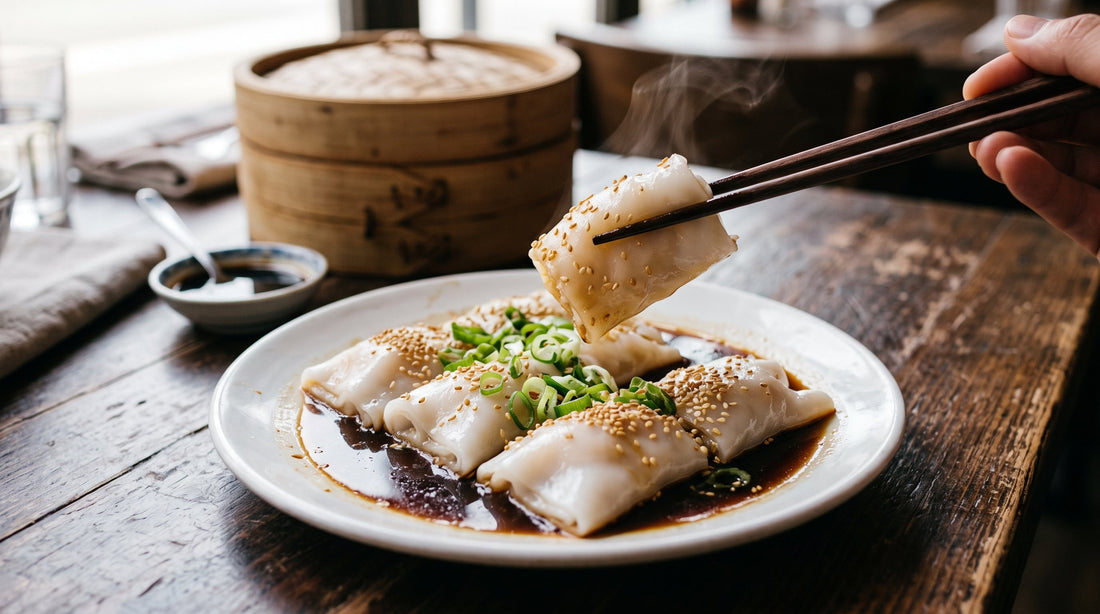
Cheung fun — the silky, slippery rice noodle rolls you see stacked on dim sum trolleys — are one of Cantonese cooking's simplest pleasures: steamed sheets of rice batter, rolled up and dressed with sweet soy sauce. They look like restaurant food, but they are surprisingly approachable at home. Here is what they are, the different kinds, and how to eat (or make) them yourself.
What is cheung fun?
Cheung fun (腸粉, also written cheong fun) literally means "intestine noodles" — an unglamorous name for an elegant dish, earned because the rolled-up sheets resemble, well, you can guess. A thin batter of rice flour and water is steamed into a delicate sheet, then rolled and cut into plump white rolls.
The texture is the whole point: soft, smooth and slippery, with a gentle rice sweetness. Cheung fun is a dim sum staple across Hong Kong, Guangdong and every Cantonese restaurant in the UK.
The main kinds of cheung fun
- Plain (豬腸粉). Just the rolls, cut into sections, served with sweet soy sauce, sesame sauce, hoisin and a scatter of sesame seeds. A beloved Hong Kong street breakfast.
- Filled dim sum rolls. The restaurant version — sheets wrapped around fillings like char siu, prawns, beef or scallions, steamed and dressed with sweetened soy sauce at the table.
- Zha leung (炸兩). The maximalist one: a crispy fried dough stick (youtiao) wrapped inside a soft rice noodle roll. Crunchy inside, silky outside.
- Vegetarian. Filled with mushrooms, preserved vegetables or simply spring onions — just as good.
Cheung fun vs ho fun — what's the difference?
The two most confused Cantonese rice noodles, both wide, white and made from rice:
- Cheung fun — thin steamed sheets, rolled or folded. Eaten fresh and soft, usually as dim sum or a street snack with sauce.
- Ho fun (河粉) — wide flat noodle ribbons, sold fresh or dried, made for stir-frying. Beef chow fun is the famous dish.
Same family, different job: cheung fun steams, ho fun fries. We cover the whole noodle family in our guide to rice noodle types.
How to eat cheung fun
- Heat them. Plain rolls are best warm — a few minutes in the steamer or a brief microwave under a damp paper towel brings back the silkiness.
- Sauce generously. The classic street-stall trio is sweet soy sauce, sesame (peanut) sauce and hoisin. Chilli oil if you like heat.
- Sesame seeds on top. Toasted sesame seeds are not optional garnish — they are half the flavour.
- Cut into bite-size pieces and eat with chopsticks while warm. They firm up as they cool.
Can you make cheung fun at home?
Yes, and it is more achievable than it looks. The traditional method steams a ladle of batter on cloth over a wok, but the home version uses a simple trick: a thin layer of rice noodle batter in an oiled shallow tray, steamed for 2–3 minutes until just set, then loosened and rolled. A dedicated rice noodle roll flour blend takes the guesswork out of the batter — the starch balance is what gives the sheets their stretch without tearing.
Honest advice: make them from scratch once, for the fun of it. Then keep a packet of ready-made rolls in the freezer for every time after that.
Our cheung fun picks

Ready-made rice noodle rolls — steam, sauce and eat. Dim sum at home in five minutes.
View product →
Winner Foods Vegetarian Cheung Fun 400g
The plant-based version — same silky rolls, vegetarian-friendly filling.
View product →
BS Flour for Rice Noodle Roll 454g
The dedicated flour blend for making your own — the right starch balance for sheets that roll without tearing.
View product →Cheung fun FAQs
Is cheung fun gluten free?
The rolls themselves are made from rice flour and are naturally gluten free. The sauces often are not — soy sauce usually contains wheat, so check labels or use tamari if you are avoiding gluten.
How do you pronounce cheung fun?
Roughly "churng fun" in Cantonese. You will also see it spelled cheong fun — same dish, different romanisation.
Can you reheat cheung fun?
Yes — steaming is best (3–4 minutes), or microwave under a damp paper towel in short bursts. They dry out quickly without moisture, so don't reheat them uncovered.
Is cheung fun vegan?
Plain rice rolls are vegan. Filled versions vary — check the filling, and remember the standard sauces (hoisin, oyster-based sauces) may not be.
What's the difference between cheung fun and rice paper rolls?
Rice paper (Vietnamese banh trang) is a dried sheet you rehydrate and wrap around fresh fillings, served cold. Cheung fun is a fresh steamed sheet, served warm with sauce. Both rice, very different eating.