


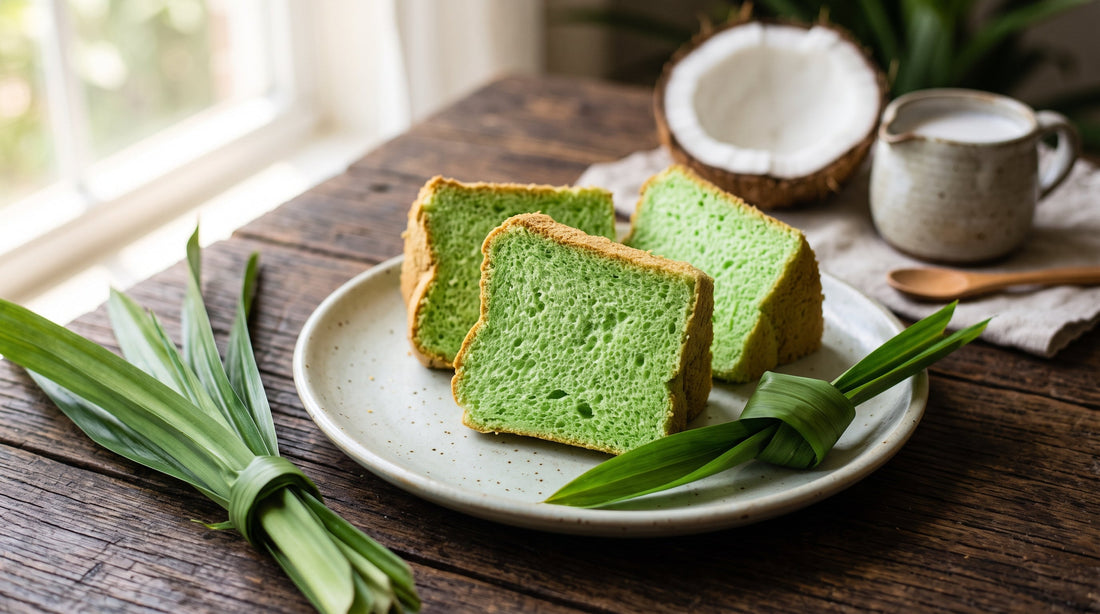
Pandan is the vanilla of South East Asia — a long, blade-like green leaf that perfumes cakes, rice, curries and drinks with one of the most loved aromas in Asian cooking. If you have ever had a bright green chiffon cake, a fragrant bowl of coconut rice or a pandan latte and wondered where that flavour comes from, this is it. Here is what pandan is, what it tastes like, and how to use it at home.
What is pandan?
Pandan (Pandanus amaryllifolius) is a tropical plant grown across Thailand, Malaysia, Indonesia, Vietnam and the Philippines. The long, narrow leaves — sometimes sold as screwpine leaves — are the part used in cooking. You will also see it called ban lan ye (班蘭葉) in Cantonese shops, bai toey in Thai, and daun pandan in Malay.
In UK shops pandan comes in four forms:
- Fresh leaves — the real thing, and the best flavour. Sold in bunches, usually in the fresh or chilled section.
- Pandan extract — a bottled liquid made from the leaves. Convenient, keeps well, and the best substitute when fresh leaves are not to hand.
- Pandan essence — a stronger, usually artificially boosted flavouring, sold in tiny bottles. Use drops, not spoonfuls.
- Pandan paste or powder — concentrated forms used mostly by bakeries.
What does pandan taste like?
Softly sweet and grassy, with notes of vanilla, coconut and a faint nuttiness — some people describe it as the smell of freshly cooked jasmine rice turned into a dessert flavour. It is an aroma more than a taste: pandan rarely makes anything sweeter on its own, but it makes everything smell irresistible.
The natural green colour is a bonus. Anything made with real pandan takes on a soft jade tint, which is why so many South East Asian cakes and jellies are green.
7 easy ways to use pandan
- Pandan rice. Tie a fresh leaf in a knot and drop it into the rice cooker with jasmine rice and a splash of coconut milk. This is the fragrant rice served with Hainanese chicken rice and nasi lemak.
- Pandan chiffon cake. The famous one — a tall, impossibly light, jade-green sponge. The defining cake of Singapore and Malaysia.
- Kaya (coconut jam). Pandan is the green half of kaya, the coconut-egg jam spread on toast across Malaysia and Singapore.
- Desserts and jellies. Pandan flavours cendol, kuih, agar jellies and sticky rice desserts like mango sticky rice's coconut sauce.
- Pandan chicken. Marinated chicken wrapped in pandan leaves and fried — the leaves protect the meat and perfume it at the same time. A Thai restaurant classic that is easier at home than it looks.
- Drinks. Simmer leaves with water and sugar for a pandan syrup — the base of pandan lattes, bandung-style drinks and bubble tea flavours.
- Curries and soups. A knotted leaf in a coconut-based curry or a tom kha adds background fragrance, removed before serving like a bay leaf.
Fresh leaves vs extract vs essence
Fresh leaves give the truest, most delicate flavour and are what we recommend whenever a recipe matters. Knot them to release the aroma, simmer, then remove. They freeze well — wrap in cling film and they keep for months.
Extract is the practical weeknight option: a teaspoon or two into batters, rice or syrups. Check the label — the best ones are mostly pandan and water.
Essence is the strongest and the easiest to overdo. Start with a quarter of what the recipe says for extract, taste, and add more cautiously. It is also the one to use when you want the vivid green colour for baking.
Where to buy pandan in the UK
Fresh pandan is rarely in mainstream supermarkets — this is exactly the kind of ingredient Asian grocers exist for. At Tuk Tuk Mart we stock it in every useful form:

The real thing — for pandan rice, pandan chicken and any recipe where the aroma matters most. Freezes well.
View product →
Por Kwan Pandan Leaves Extract 400ml
Bottled pandan flavour for baking, desserts and drinks — the convenient option that keeps in the cupboard.
View product →
Sun Fung Bakery Pandan Chiffon Cake 220g
Want the flavour without the baking? The classic green chiffon, ready to slice.
View product →Pair them with coconut milk and jasmine rice from the rest of the shop for the full pandan experience.
Pandan FAQs
Is pandan the same as vanilla?
They play a similar role — a background aroma rather than a main flavour — but they taste nothing alike. Pandan is grassier, nuttier and more floral. Think of it as South East Asia's own answer to vanilla, not a copy of it.
Can I grow pandan at home in the UK?
Yes, as a houseplant. It needs warmth, bright indirect light and regular water. It grows slowly in the UK climate, so most cooks still buy leaves — but a pot on a warm windowsill will give you the odd fresh leaf.
How do I store fresh pandan leaves?
In the fridge, wrapped, they keep about a week. For longer, freeze them flat in a bag — they lose a little aroma but work perfectly in cooking for up to six months.
Is pandan healthy?
Pandan leaves have a long history in traditional herbal use and contain plant compounds being studied for various benefits. In everyday cooking the quantities are small — enjoy it as a flavouring rather than a supplement.
Why is my pandan cake brown instead of green?
Real pandan gives a soft jade colour, not neon green. If a recipe promises vivid green, it is relying on essence or colouring. A gentle green is a sign you used the real thing.