


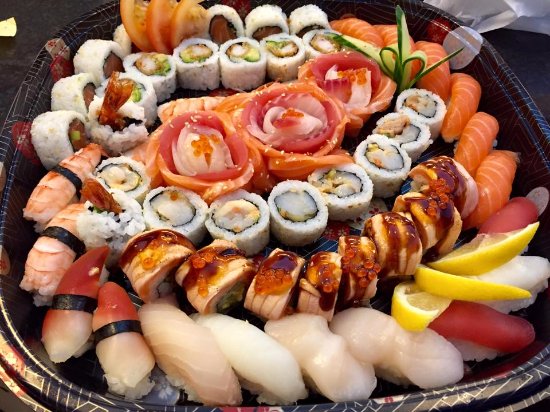
To make sushi rice, start with Japanese-style short- or medium-grain rice. Rinse it until the water runs almost clear, then cook it with the amount of water your pack gives. While it's still hot, fold in sushi seasoning (rice vinegar, sugar and salt), then let it cool to room temperature. Here's each step, plus which rice and seasoning to buy.
Quick answers
- Which rice: japonica rice, short or medium grain, sold as "sushi rice". Jasmine and basmati won't hold together.
- The method: rinse, cook, season while hot, fold gently, cool.
- Water and timings: they differ between brands, so follow the instructions on your pack.
- The seasoning: a ready-made sushi seasoning, or rice vinegar mixed with sugar and salt.
What is sushi rice?
Sushi rice is japonica rice, the short- or medium-grain type eaten in Japan. It cooks soft and slightly sticky, so the grains hold together when you roll or shape them. Long-grain rice, such as jasmine or basmati, cooks into separate grains, so it falls apart in a roll.
Sushi rice isn't the same as glutinous (sticky) rice. Glutinous rice is far stickier and chewier, and it's used for dishes such as mango sticky rice, not sushi.
Not all sushi rice is grown in Japan. Haruka's, for example, is a japonica rice grown in Italy.
Which sushi rice to buy
- Nishiki Premium Quality Medium Sushi Rice 10kg, one of our two best-selling sushi rices over the past year, and Nishiki Premium Grade Sushi Rice 1kg
- Kobasuki short-grain sushi rice, in 1kg, 5kg and 10kg bags
- Yume Nishiki short-grain rice 1kg and Kotobuki sushi rice 1kg
- Haruka Japanese-style rice for sushi 1kg
- Yutaka semi-polished brown sushi rice 5kg, if you'd like a brown rice
See all our sushi rice.
How to make sushi rice, step by step
1. Rinse the rice
Put the rice in a bowl of cold water, swirl it with your hand and pour the cloudy water away. Repeat until the water runs almost clear. This washes off loose starch, so the cooked rice is sticky without turning gluey.
2. Cook it the way your pack says
Use the rice-to-water amount on your pack, because it isn't the same for every brand. Some packs also ask you to soak the rice before cooking. A rice cooker or a pan with a tight lid both work. When it's cooked, leave the lid on so it can rest and finish steaming.
3. Season it while it's hot
Tip the hot rice into a wide, shallow bowl. In Japan this is a wooden tub called a hangiri, but any wide bowl works. Sprinkle the sushi seasoning over the rice. Hot rice soaks it up evenly; cold rice doesn't.
- Ready-made: Mizkan sushi seasoning 568ml and Kikkoman seasoning for sushi 300ml. Use the amount on the bottle, as brands differ in strength.
- Mix your own: rice vinegar with sugar and salt, stirred until they dissolve. We stock Takao sushi rice vinegar and more in mirin and rice vinegar.
Not sure which vinegar is which? See rice vinegar vs rice wine.
4. Fold, don't stir
Use a flat rice paddle or spatula to cut through the rice and turn it over, so the seasoning spreads without crushing the grains. Fanning the rice as you fold helps it cool and gives the grains a light shine.
5. Cool, cover and use
Sushi rice is easiest to shape at room temperature. Cover the bowl with a damp, clean tea towel so the top doesn't dry out. The rice firms up in the fridge, so make it close to when you'll use it. Don't leave cooked rice out for long, and chill any leftovers quickly.
What to make with it
- Sushi rolls (maki): rice and fillings rolled in nori with a bamboo mat.
- Hand rolls: half sheets of nori rolled into cones by hand.
- Inari: seasoned fried tofu pockets filled with sushi rice. Yutaka inari sushi pockets come ready to fill.
- Nigiri: small hand-pressed blocks of rice with a topping.
Onigiri (Japanese rice balls) use the same type of rice, but they're usually made with plain cooked rice and a little salt rather than seasoned sushi rice.
Cucumber, avocado and cooked fillings are an easy place to start. We don't sell fish for eating raw. If you want raw fish, ask your fishmonger for fish sold for eating raw.
Your sushi shopping list
- Sushi rice, from the list above
- Sushi seasoning or rice vinegar
- Nori: Kaitatuya yaki sushi nori (10 sheets) or Yutaka half-cut sushi nori for hand rolls
- A Yutaka bamboo sushi rolling mat
- S&B wasabi paste
- Pickled ginger: J-Basket sushi ginger or Kouun sushi ginger
- Soy sauce for dipping: Yamasa sushi soy sauce or Kikkoman sushi and sashimi soy sauce
Find them all in our sushi ingredients and Japanese food ranges.
Ordering sushi rice online
Sushi rice, seasoning, nori and sauces go by standard DHL delivery, with free mainland UK delivery on orders over £75. See our delivery details.
Sushi rice FAQs
What rice is used for sushi?
Japonica rice, short or medium grain, sold as sushi rice. It cooks soft and slightly sticky, so it holds together when you roll or shape it.
Can I use jasmine or basmati rice for sushi?
It won't work well. Jasmine and basmati are long-grain rices that cook into separate grains, so they fall apart in a roll. Use a short- or medium-grain sushi rice.
Do you need to rinse sushi rice?
Yes, rinsing is the usual first step. It washes off loose starch so the cooked rice is sticky but not gluey. Check your pack too, as some brands also ask you to soak the rice.
What is sushi seasoning made of?
Vinegar, sugar and salt. Kikkoman's seasoning for sushi lists water, rice vinegar, sugar and salt. You can mix your own from rice vinegar, sugar and salt.
Is sushi rice the same as sticky rice?
No. Sticky rice is glutinous rice, which is much stickier and chewier. Sushi rice is a non-glutinous japonica rice.
Where can I buy sushi rice in the UK?
At Tuk Tuk Mart. We stock Nishiki, Kobasuki, Yume Nishiki, Kotobuki, Haruka and Yutaka sushi rice in bags from 1kg to 10kg, plus seasoning, nori and rolling mats, sent by DHL from our Manchester Asian supermarket, rated 4.9/5 from over 2,700 verified reviews.